Artists featured in the monthly Member Spotlight are selected from our online Members' Gallery. If you wish to be considered for the Spotlight in the future, send us a note! Speaking of notes, it should be noted, that much of the interview below was originally given by Gianpaolo Arena and Bryan Schutmaat and has been edited for publication here.
Peter Brown - September 2025
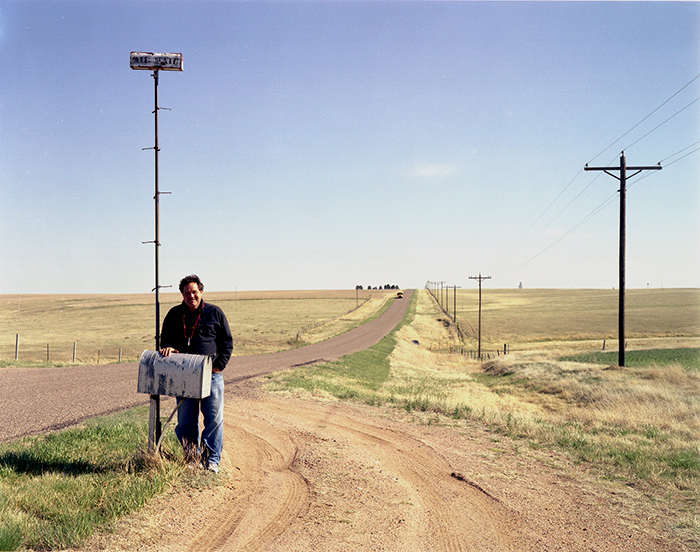
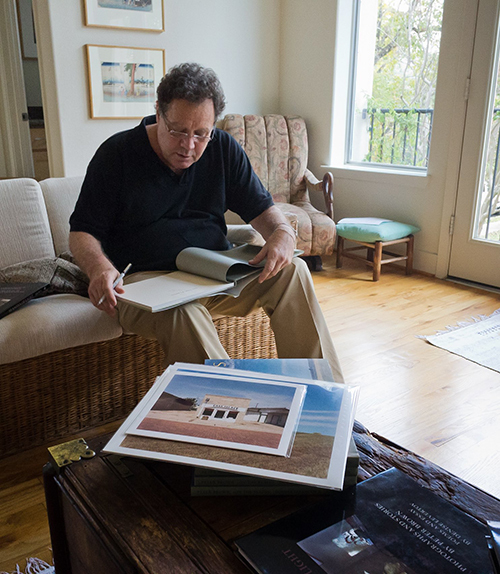
Peter Brown is a Houston based photographer. Among his books are Seasons of Light, On the Plains, West of Last Chance, Habiter L’Ouest and Hometown Texas. He has photographed the High Plains of the American West for many years. He is the recipient of The Imogen Cunningham Award, The Alfred Eisenstaedt Award, The Dorothea Lange–Paul Taylor Prize, a Graham Foundation Grant, an NEA Individual Artist Fellowship and the Callanan Prize. He teaches at the Glasscock School at Rice University where a gallery was named in his honor. His photographs have been collected by the MFAH, The Menil, MOMA, SFMOMA, LACMA, The Amon Carter and the Getty Museum among others. He is a founding member of Houston Center for Photography and has been a member of TPS since 1997. He is represented by PDNB Gallery in the Dallas area and Stephen L. Clark Gallery in Austin, TX.
Which artists influenced your beginnings the most? Where can the roots of your work be found?
Joel Meyerowitz published Cape Light in 1978 – an important book for me at the time. My black and white work was essentially about light and his color work seemed to be as well. And he had an interest in American culture. Plus the interview he gave on color I thought was perceptive. He, Shore and Eggleston became the triumvirate of color back then and in 1979, after five or six years of black and white work I switched to color and have never really looked back.
Still, black and white photographers have had a profound influence on me and my work from the very beginning. Timothy O’Sullivan, to Eugene Atget, to Walker Evans, to Robert Frank is a fairly conventional route of influence that I’ve traveled. But there have been many more: Robert Adams notably for his imagery, for his writing, for his friendship and intelligence - and for the places he photographs; Lee Friedlander for his scalpel-like eye and his ability to structure the chaos around him; Gary Winogrand for the cultural critiques, his humor, his appetites and the helter-skelter way he took pictures; Walker Evans of course for the subtle order and the vernacular beauty that he recognized everywhere, and Cartier-Bresson for all the reasons that anyone admires Bresson: the miraculous timing, the global perspective, the grace under pressure, and the perfection of the photograph. But also Koudelka, Minor White, Gene Smith, Kertesz, Bernice Abbot, my wonderful teacher at Stanford, Leo Holub. Those were the photographers who were particularly there for me at the start.
But I could say also that before that even, my real beginnings were when I was a kid looking at LIFE Magazine and National Geographic. And Field and Stream, Outdoor Life and Sports Afield as well. I was a fisherman and loved the photos of the natural world as well as the crazy cobbled together shots of leaping trout and night pictures of gigantic catfish and the like. Sports Illustrated too had its effect. I lived for sports.
And as far as subject matter goes, the roots of my curiosity about the west are in children’s fiction and in television of the fifties: Rolling Wheels, books like Jeb Bridger: Mountain Man or Kit Carson: Man of the Plains, TV shows such as Cheyenne, Have Gun Will Travel, Gunsmoke, Rawhide, Rin Tin Tin, Roy Rogers, Gene Autrey; lots of Westerns. At the perfect time (I was twelve) we moved from the east coast to the west and kept a summer home in northwestern Massachusetts -- and because of this we would make two car trips each summer, back and forth across the country. And that did it. I fell in love with the West and I became a Westerner. Moving to Houston to teach at Rice University after graduate school didn’t hurt either…
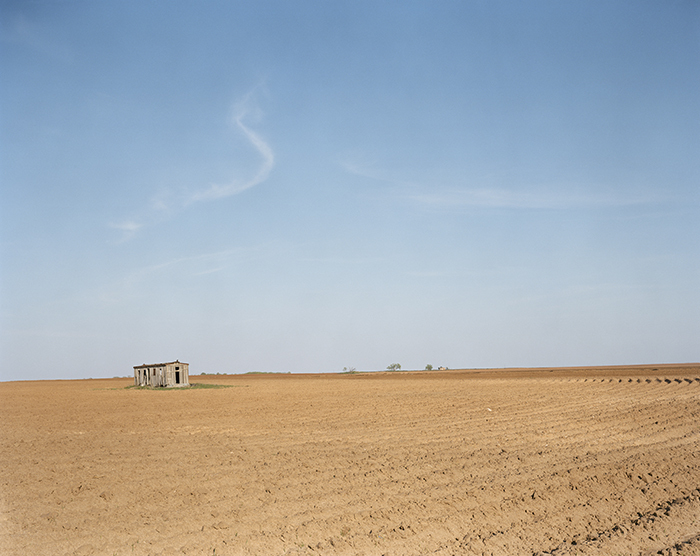
How much poetry or prose is present in your photographic work? Is there any sort of connection between literature and the way you’ve described America?
I think of my work as being a kind of personal documentary: a documentary that’s within a lyric tradition. Each photograph is both a description of a specific place, yet within that description something else must resonate. Some unknown. So the photograph may or may not have anything to do with its ostensible subject matter. The best work may be about the West, but just as importantly about other things that are more universal. I’m not sure how to put this without using symbolic examples, but this X factor can have to do with anything - from the most cultural to the most personal.
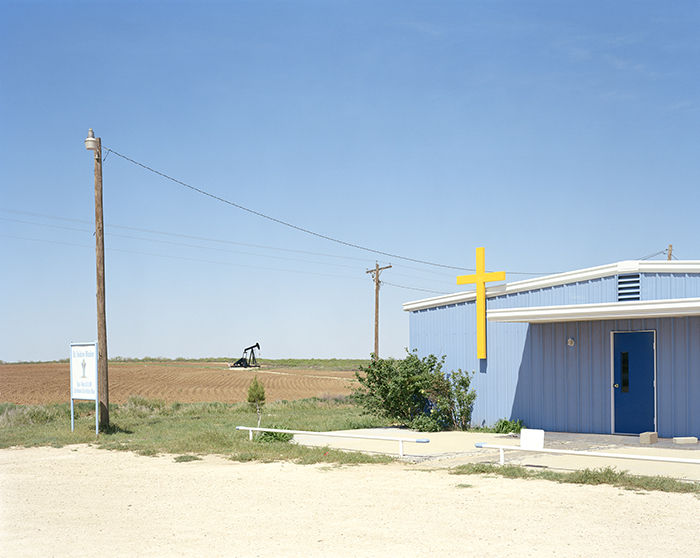
There are some photographers whose work is resolutely about the real world –the nuts and bolts of the everyday. There are others whose work attempts to be “poetic” in nature – someone like Minor White or Michael Kenna perhaps, and then there are those who seem to create the equivalent of novels – Walker Evans certainly, Robert Adams in a way, although his work seems to be more epic narrative poetry…
I think, since we’re speaking of literature, that the best work, the work that truly holds up over time is a mix of all of this – and because that mix is something I look to, the most vital way for my work to be presented is through books. A narrative is there in the sequence; the real world is involved in each image and the “poetic’, (though this word always makes me cringe a bit in relationship to photography) is there as underpinning.
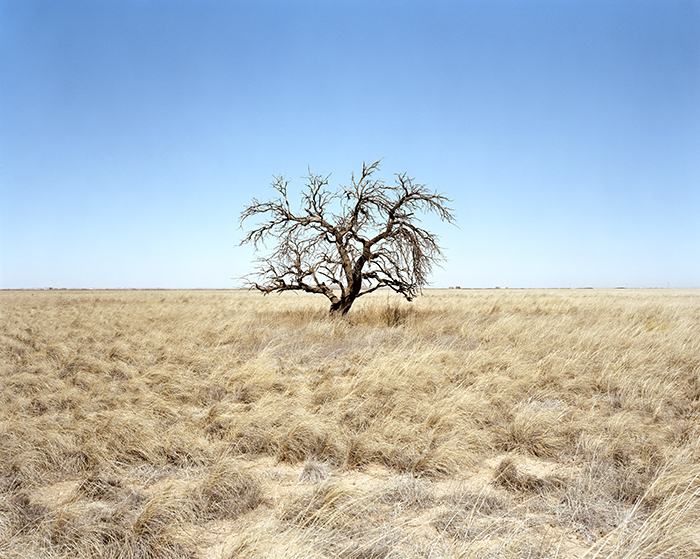
How do you choose the subject of your projects?
Again, it’s mostly intuitive, though I certainly think about projects before I begin them. I remember the writer John McPhee saying that every subject he’d felt compelled to write about over his long career had fascinated him before he turned twenty. And I think this is true for many of us. I’ve been interested in the West all my life and for many reasons, within the larger context of the West I’ve been drawn to the Great Plains.
I knew when I began to photograph in a serious way, that vast regions of the West had been photographed time and time again – the Sierra, the Rocky Mountains, the deserts of the southwest, the Great Basin, huge chunks of California – anything around Santa Fe… All this country had been covered thoroughly by countless photographers, and while I enjoy experiencing those regions, photographing them seemed unnecessary. I saw other photographers’ work everywhere I travelled, and though I figured I could wedge myself into a niche of my own, whatever I came up with would probably feel like a series of footnotes.
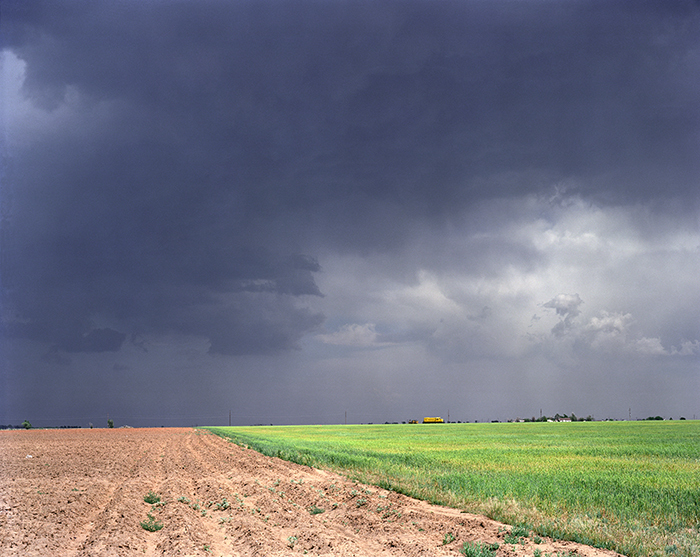
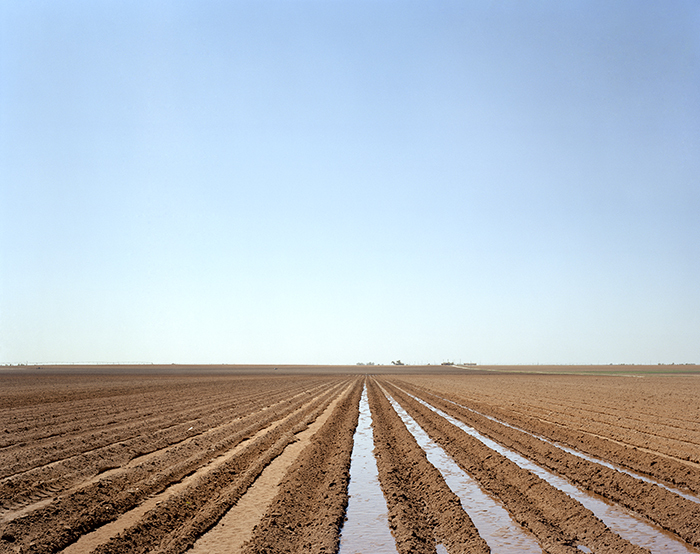
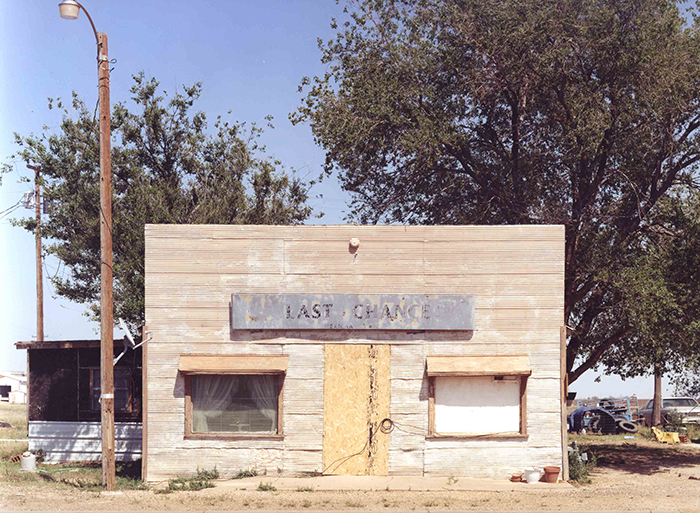
I saw at the same time (this was the early eighties) that there had been little serious work done in the vast middle of the country: the flat or rolling lands of the Great Plains. And that fact interested me. Other photographers had worked this area in the past of course, mostly in the thirties during the dust bowl: Arthur Rothstein, Dorothea Lange, Russell Lee, Jack Delano, John Vachon etc. So as an idea, the region was relatively wide open and undefined, particularly in color. The necessary requirement of course was that I had to be attracted to the Plains, which I was: to the space, the light, the color, the small towns and the tenacious people who lived there. And so, from my home in Houston, I began my journeys north…
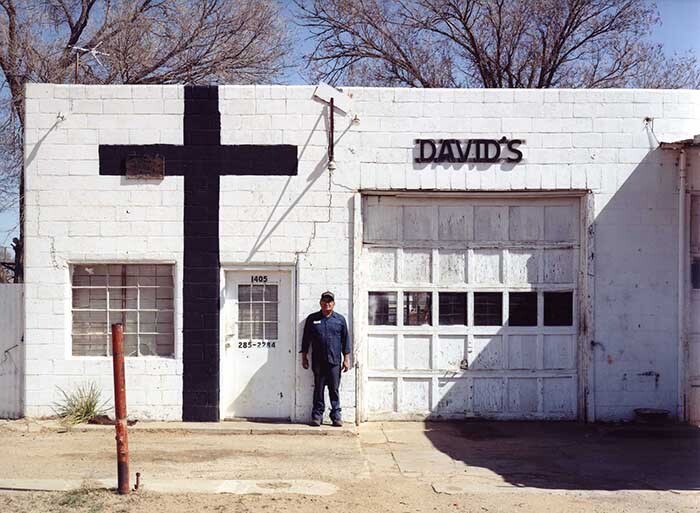
It's obvious that you really care for the culture you depict. You photograph it with tenderness and respect. I feel like your photographic approach might correlate with your convictions on humanity. Quite a massive second question, but what are your views on human nature, and is that shown in your work?
...I tend to give people the benefit of the doubt. I think in general people are smart and funny and enjoy life and oftentimes are charitable. I no longer expect perfection from my heroes, nor from myself or my family. I think that given the opportunity, decent organization and ground rules, that most people will work well together and will be supportive and decent. My photographic teacher at Stanford, Leo Holub gave me a picture that is a simple graffiti on a worn wooden wall. It reads: “Be Kind”. A decent mantra for just about any occasion.
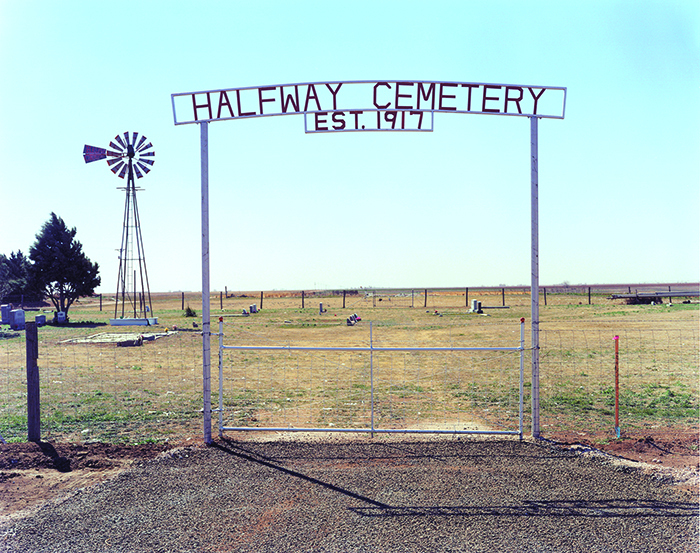
I generally look for something that I can believe in. Something that seems whole and complete and balanced in the way I feel that life either is or legitimately might be. And this does not mean beauty in conventional ways at all. That kind of beauty I find trite in photography, because it does not describe the difficult places we often find ourselves.
But I do think that’s what a lot of my work is about. Coming across those moments where there’s a kind of beauty that I can believe in. That is multi-dimensional and humane. It can include all sorts of oddnesses and stupidities because those things can be just as endearing and as important as brilliance and perfect thought and it can include majesty and devastation at the same time. There needs to be a balance – and what I’ve tried to achieve in my photographs and then in my books is that kind of balance. Some of the individual photos may not do it completely on their own, but I try each time – and the sum of them is finally just as much about me and the way I see the world, as it is about the world that I depict.
You can follow Peter Brown on Instagram @peterbrownphoto