Artists featured in the monthly Member Spotlight are selected from our online Members' Gallery. If you wish to be considered for the Spotlight in the future, send us a note! This month we are pleased to feature Laurie Smith in conversation with TPS Executive Director Chris Ireland. You can see Laurie's work in the TPS Big Picture exhibition at the Arlington Museum of Art, as well as Composed at the PhotoPlace Gallery in Middlebury, VT.
Laurie Smith - September 2026
You describe yourself as a “child of the border.” Could you tell our audience more specifically what that means and how your experience has shaped your view of the border today?
El Paso is so far west that Texas barely claims us. But Juárez always has. Eighty-three percent Hispanic, with many families living on both sides of the border, El Paso isn’t a border town. It’s a binational community, split only by a river, built over centuries of shared migration, culture, faith, history, and family. I’m a fourth-generation El Pasoan, raised in a place where crossing the International Bridge from Juárez to El Paso for school, church, work, or family dinner was a daily occurrence. I didn’t grow up near two cultures. I grew up inside one. That’s what being a child of the border means to me.
With the promise to build the big, beautiful wall on our unified homeland in 2016, I’ve watched synchronicity give way to fear. Fear of crossing for work or school. Fear of calling 911. Fear of an asylum hearing. Fear of deportation. Fear of the rise in bigotry and racism. Fear of simply being Latino in your own hometown. Families who have lived here legally for generations now face real uncertainty. The faith in this borderland, once unshakable, is starting to give way to fear.
My hope is that what has been rooted in this one land over centuries is stronger than what is trying to divide it. This hope drives the passion for my Border Wall project.
Initially, you were driven to photograph the border wall. When did you decide to include the human crisis at the border?
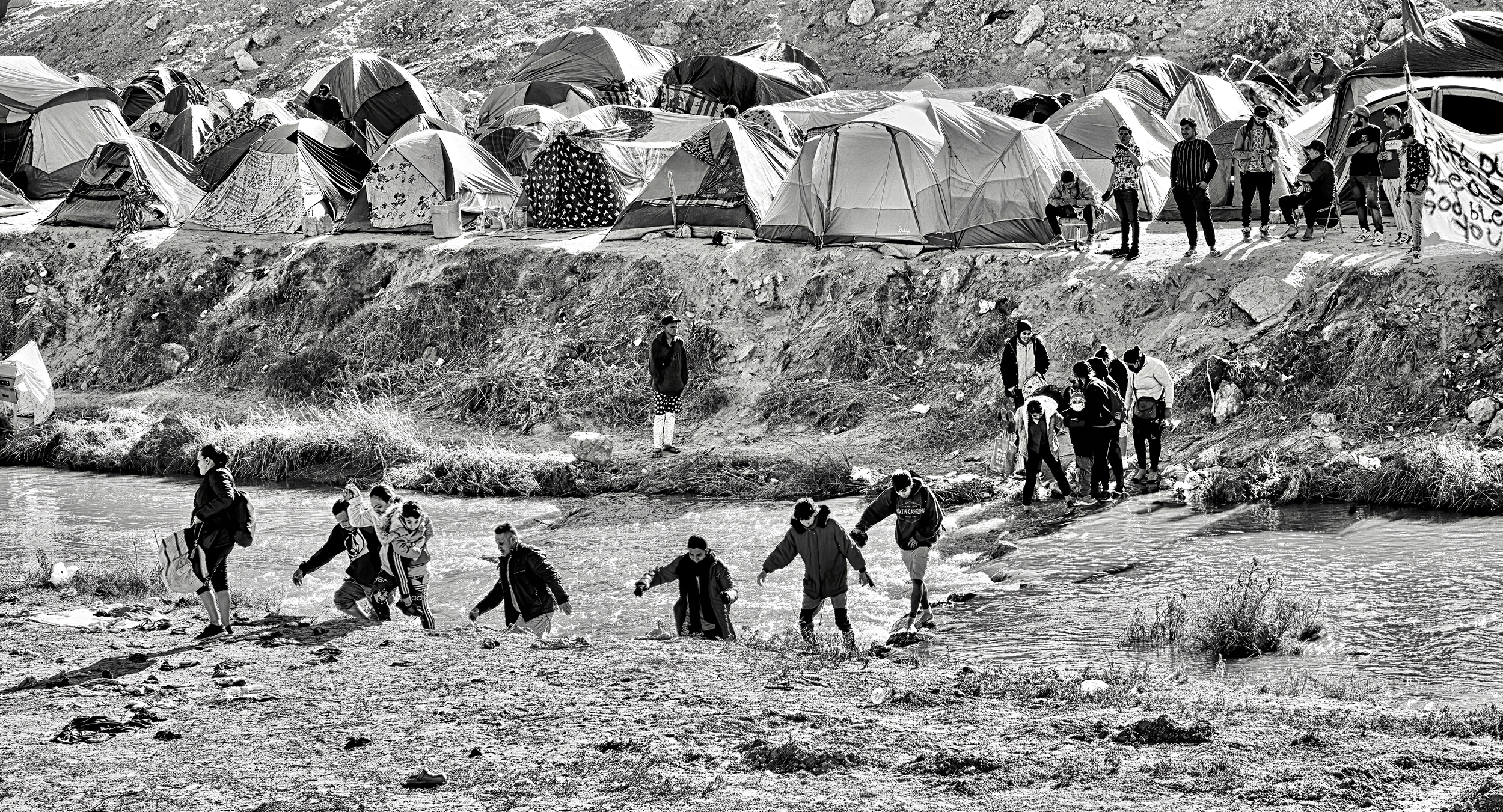
It was a cold, windy March day in 2018. I was told that families from the interior of Mexico and Central America were camping in the streets and parks of Juárez, waiting to request asylum from danger back home. I grabbed my Leica and went to see for myself.
As I crossed the Santa Fe Bridge, I heard the sound of a baby crying, somewhere beneath me. I leaned over the railing, trying to find where that sound was coming from.
I looked down through the grates. Families with babies and toddlers were being held by the U.S. Border Patrol inside a crumbling rock enclosure topped with razor wire—contained like animals. They sat on gravel under ropes, waiting for snack bars and paper cups of water. Their shoelaces had been taken, along with their backpacks and everything they carried. They stayed out there for days, exposed to the wind, wrapped only in mylar blankets. Migrants had a name for this place—La Perrera. The Dog Kennel.
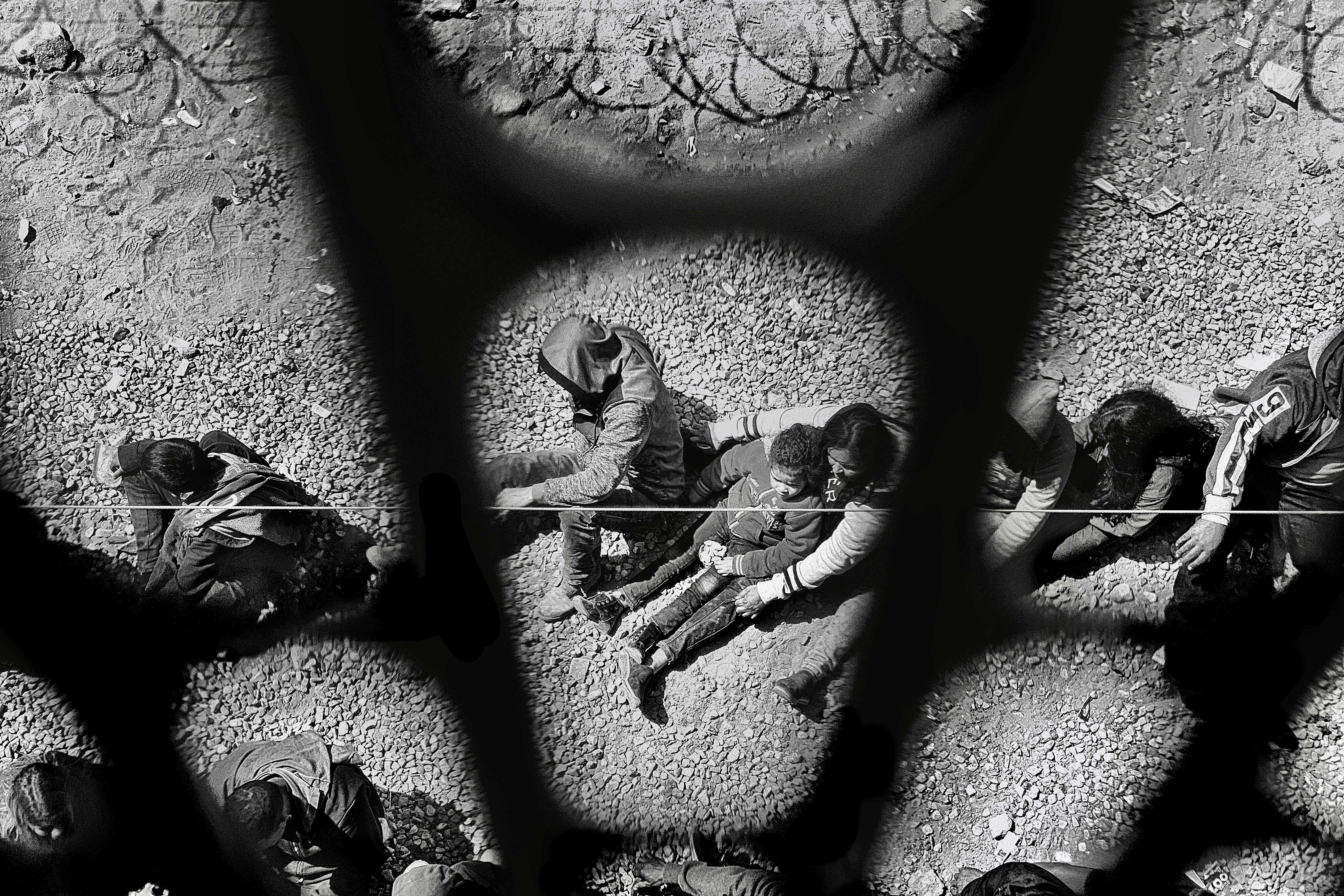
That was the moment I was moved to photograph the human crisis at the border.
I didn’t know it yet, but this was the beginning of Zero Tolerance, the policy that authorized family separation. Over 11,800 children were taken from their parents. Border Patrol kept such poor records that, to this day, many of those children have still not been reunited with their families. When the youngest were asked for their mothers’ names, the answer was almost always the same word—Mama.
That word is the whole story. No wall, no army, no deportation policy built on fear could have stopped these families from making that journey. They made it in faith, not fear.
That word is also my story. As an artist, a mother, and a human, how could I stand by with children being ripped away from Mama and not show what I was witnessing? And feeling.
Seven years later, it is happening again. Masked ICE agents are apprehending, detaining, and deporting asylum seekers, both legal and undocumented, separating families once more. A humanitarian crisis is unfolding within our own borders. People who came here legally now live in uncertainty. The once unshakable faith that brought them here is beginning to give way to fear.
Many Texas photographers are drawn to West Texas for its expansive beauty. What do you think photographers might miss when they approach the region primarily as a landscape rather than as a place with a deep and complex human history?
For centuries, this El Paso/Juárez borderland has been known as El Paso del Norte—the Pass of the North. It’s a place defined by migration—indigenous peoples, Spanish explorers, settlers, the Mexican gray wolf, and, more recently, people from around the globe in search of a safer life. Movement isn’t an aberration here. It’s the region’s oldest and most enduring story.
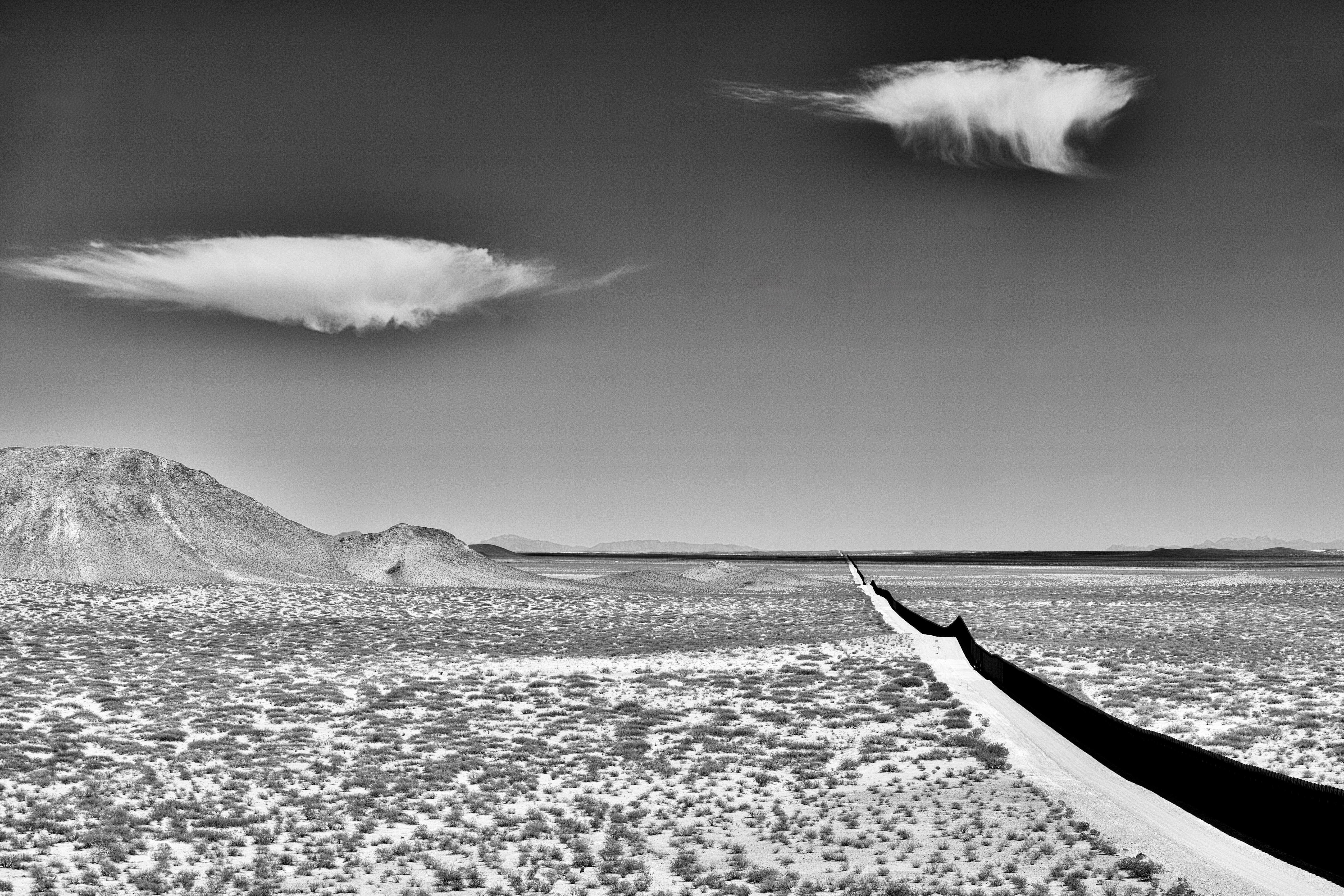
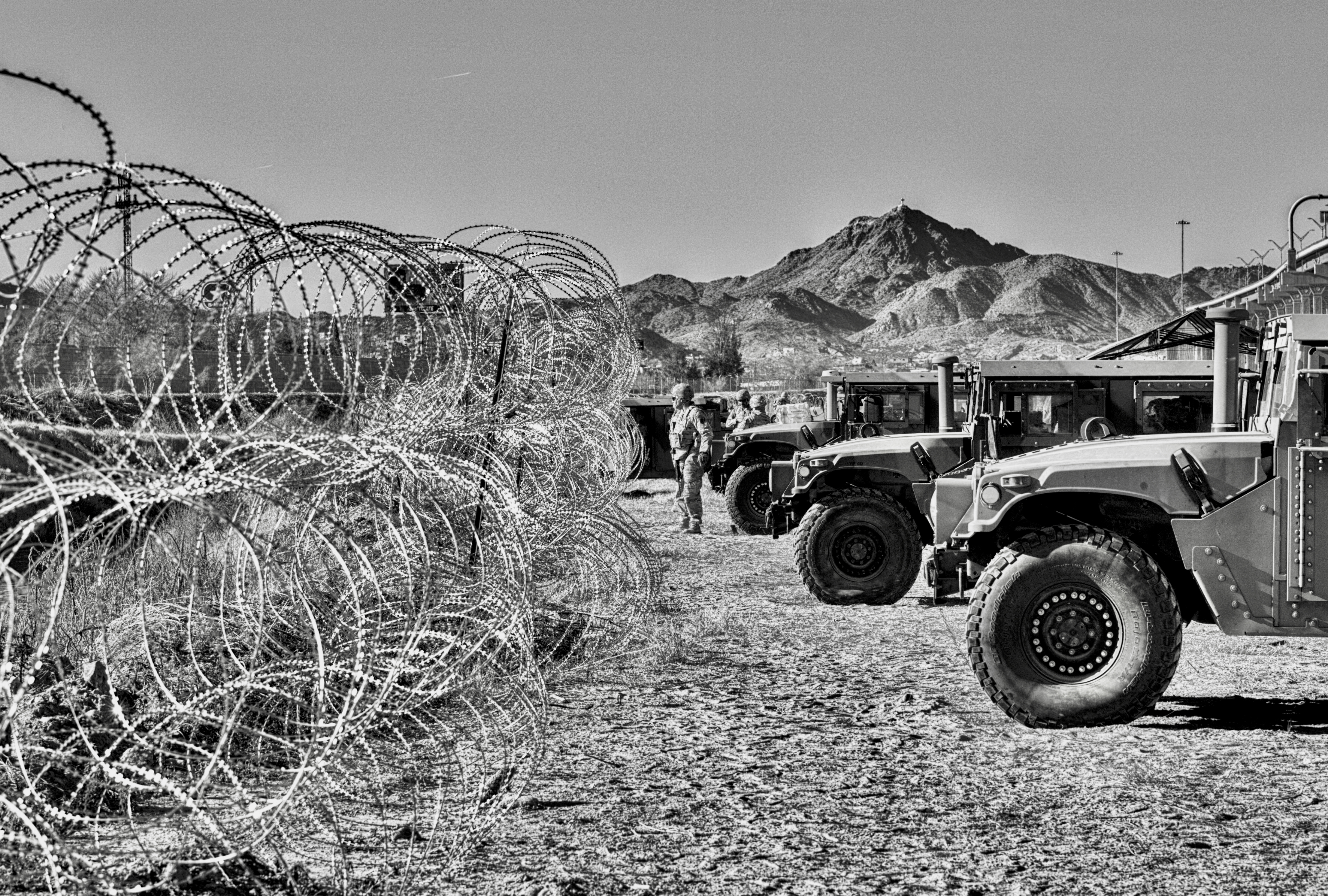
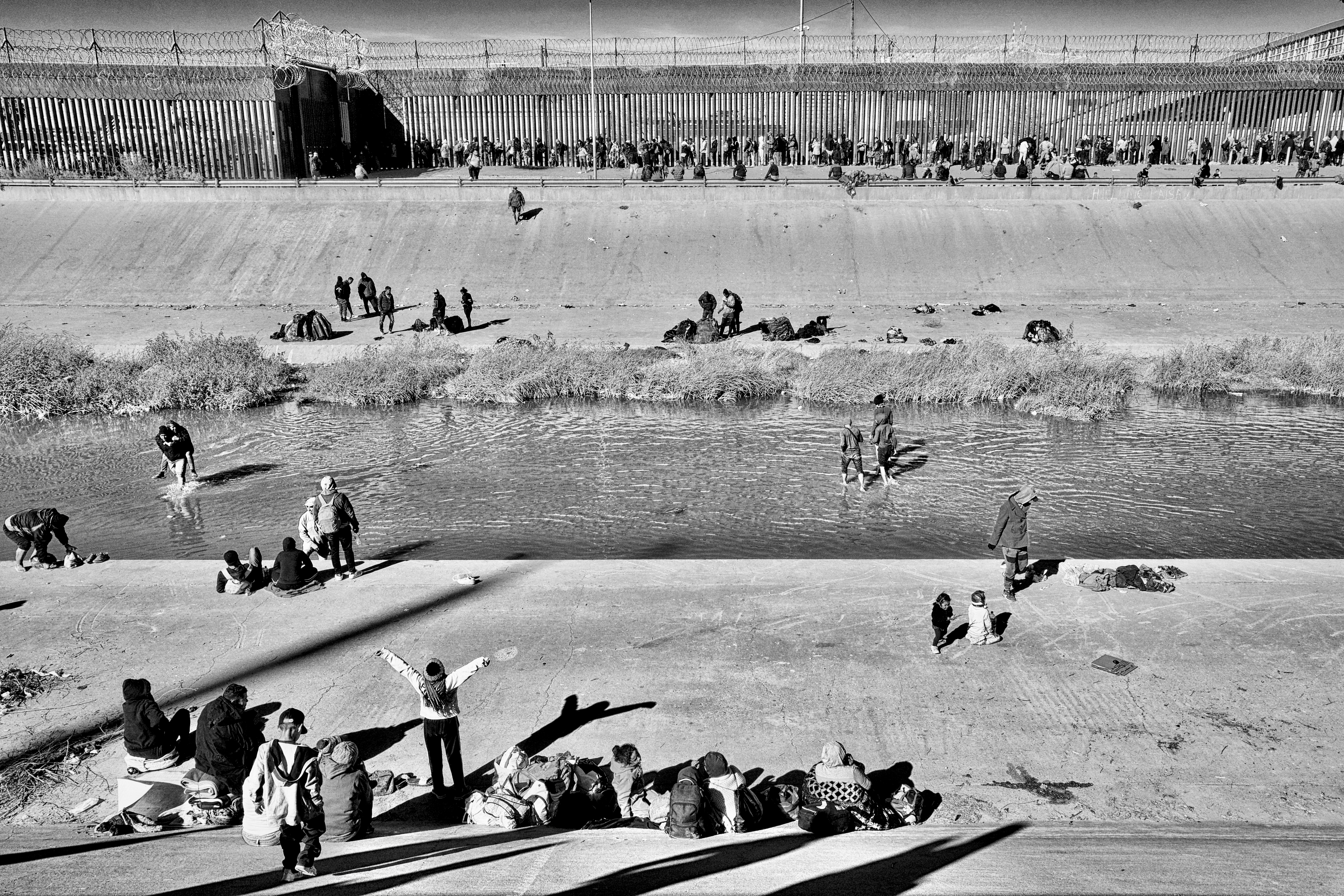
When people photograph this southern tip of the Rocky Mountains, the vast Chihuahuan Desert, and the Rio Grande cutting through it, I’d like them to look more closely at what now interrupts that view. What was once a wild, expansive landscape now looks like a war zone. This 55-mile stretch of the El Paso/Juárez sector has been declared a “national defense area.” A 30-foot steel bollard wall, still under construction, snakes infinitely across the desert. Razor wire lines the river and tops the wall. Texas National Guardsmen patrol in Humvees. Eleven hundred U.S. Army soldiers recently deployed to this region carry combat-grade weapons. Stryker vehicles sit manned, their guns pointed toward Mexico. Border Patrol trucks kick up dust, and Black Hawk helicopters scan terrain that once belonged to migrating wildlife and people alike.
There is no invasion here. It is a political stunt staged atop centuries of movement through a picturesque landscape, a place with a history, both interrupted.
Your work covers the border landscape from all sides, from Texas to Mexico, from the air to the ground, from the Border Patrol to the migrants… How do you go about gaining access to all sides, and what have you learned about the situation from the different perspectives?
Many of my photographs are taken on public land, but I’ve been given opportunities to photograph the wall that I couldn’t access without community or family collaboration or introductions. One of the most thrilling experiences was being introduced to a retired helicopter pilot who invited me to photograph the border wall from his Vietnam-era open-air helicopter.
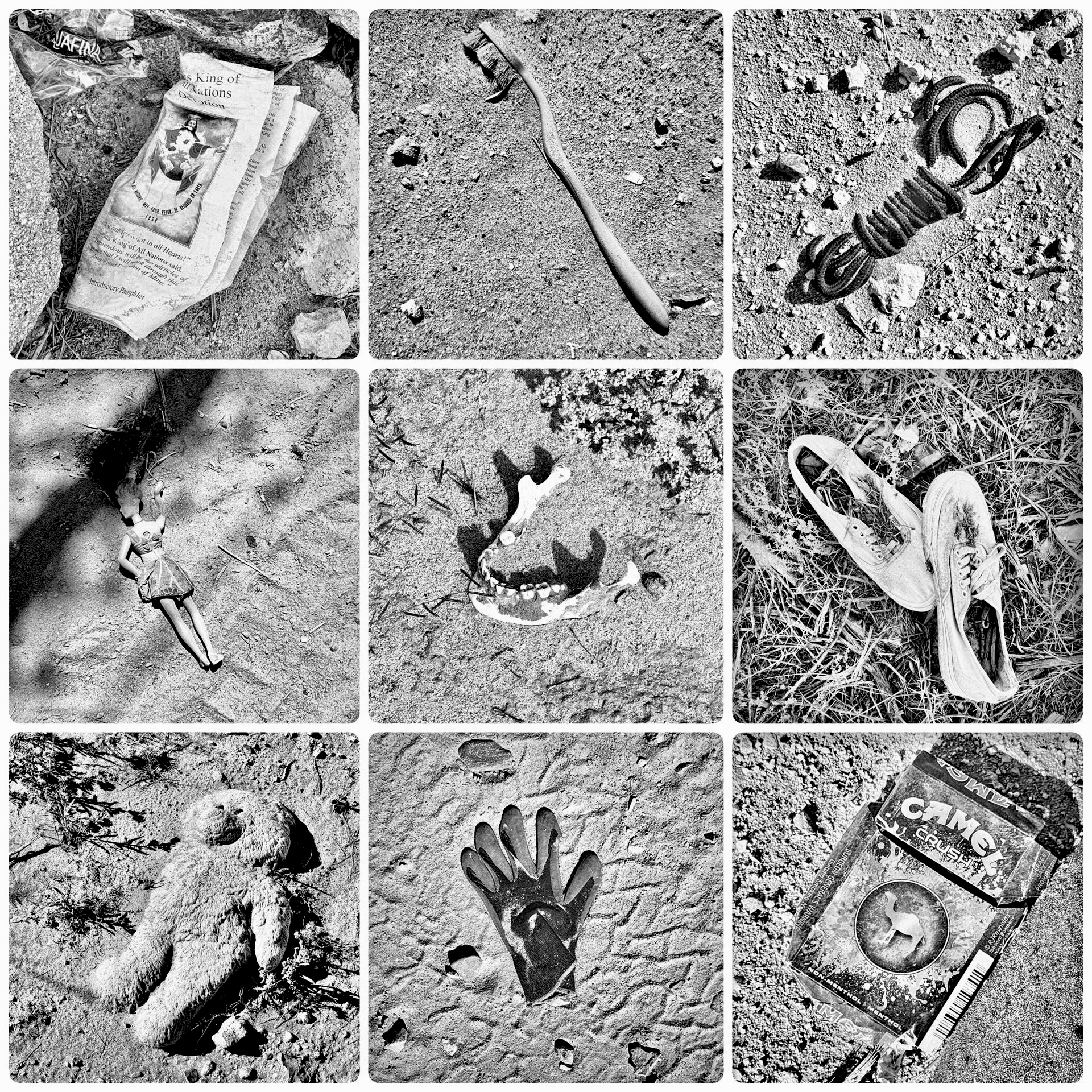
My brother, who often takes his four-wheel truck on desert dune excursions, got excited about taking his intrepid sister out to photograph the wall in the dead of night under the stars. I’ve driven the 100 miles of dirt road along the wall from Columbus, New Mexico, to Fabens, Texas, then mirrored that stretch on the Juárez side—that was public access until recently. I go on hikes, alone or with family, deep into the desert, also on public land, to look at and photograph the wall from a distance, and to discover what’s left behind—clothing, shoes, backpacks, bones—bleaching in the sun, sometimes just yards from a paved road.
Through collaboration with the Catholic community, I’ve been allowed to enter the migrant shelters to not only witness the migrants’ suffering, anxiety, and love but also document the kindness shown by many community members.
On occasion, I partner with a journalist, Morgan Smith, who has a reputation for writing fair and accurate articles about the situations unfolding at the border. Because of our respected partnership, we have earned the trust of the Border Patrol’s Public Affairs specialists, who invite us on Ride Alongs and Press events at the El Paso Sector of the border. These day-long trips are informative and always include an element of surprise.
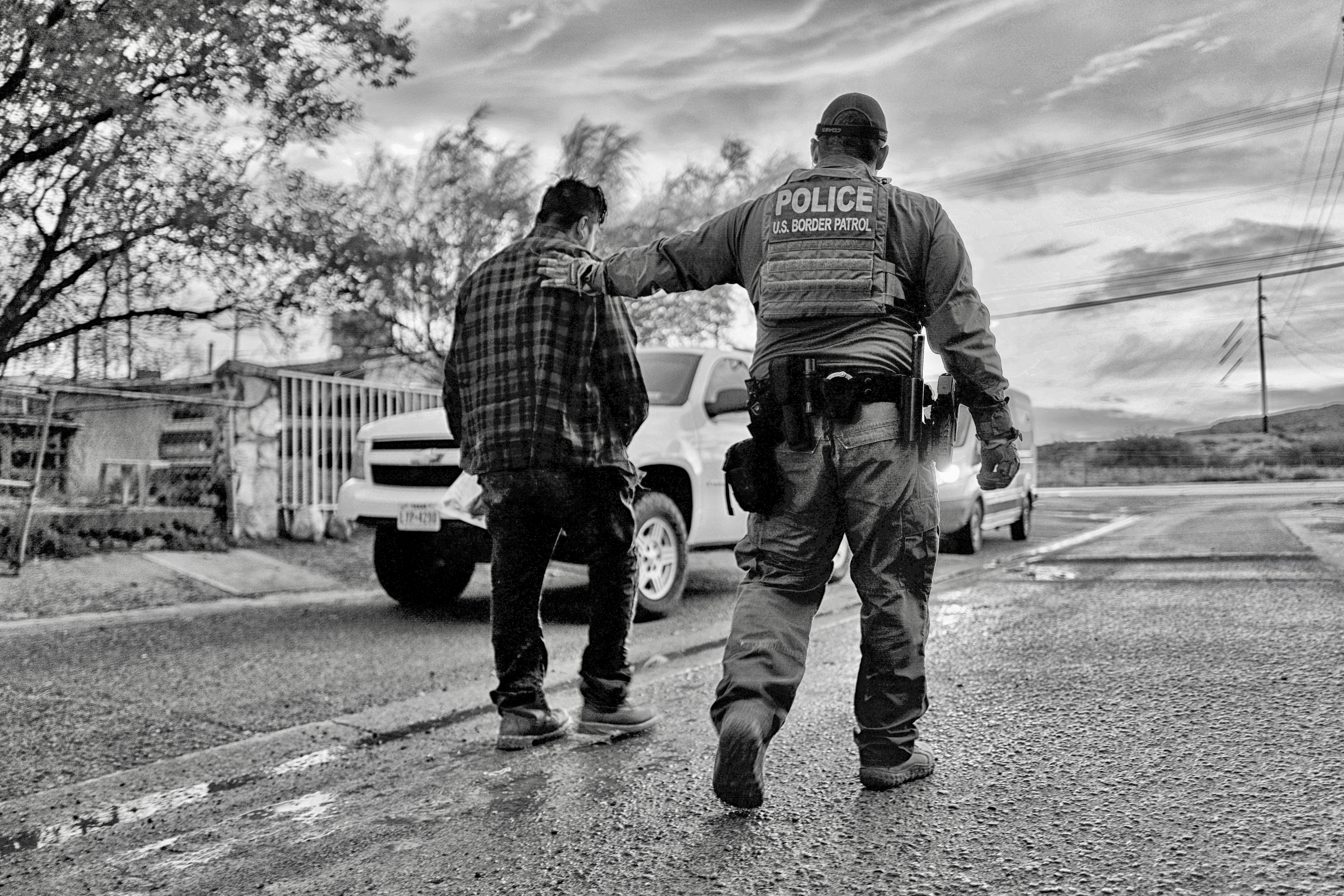
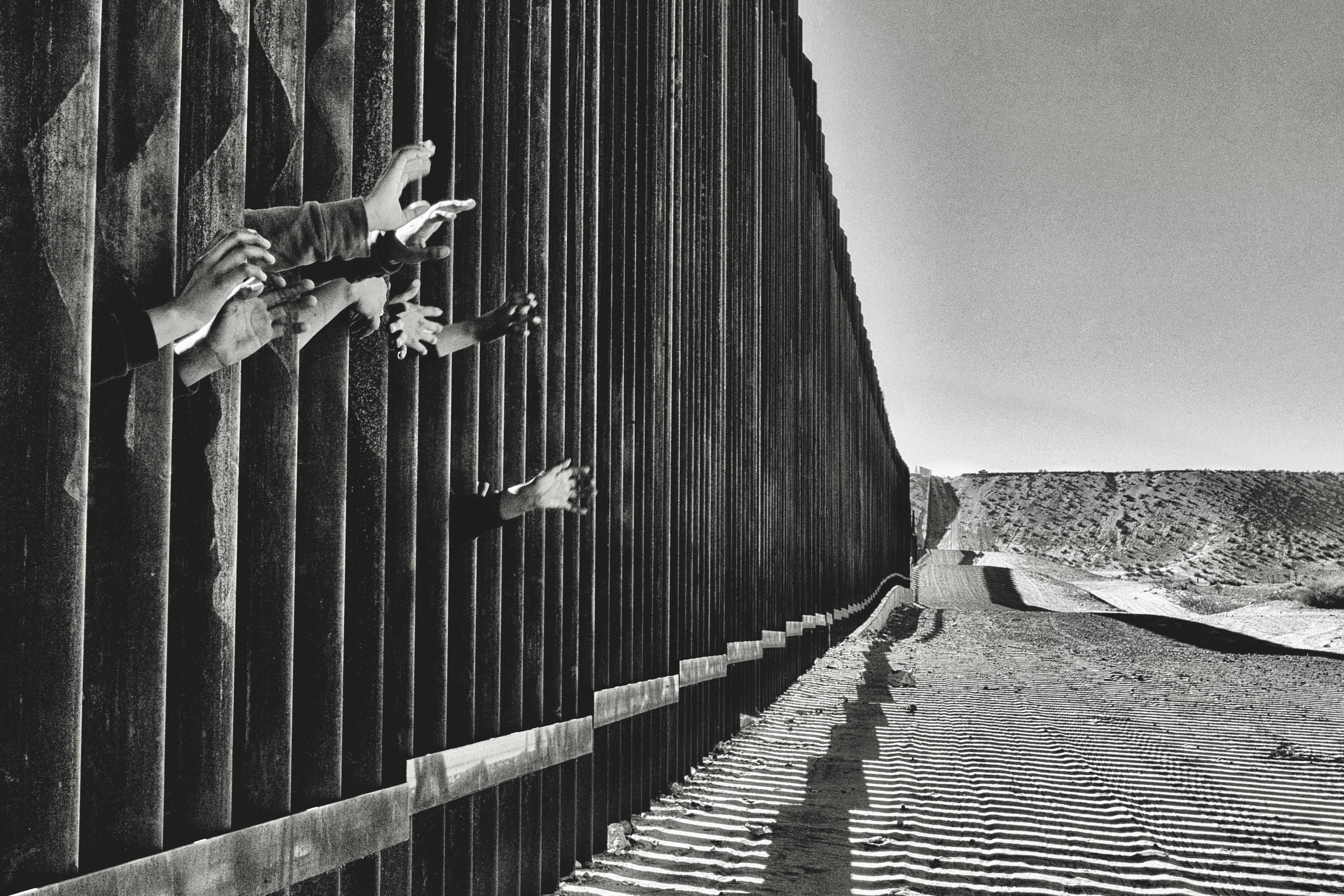
This access allowed us to follow on foot as Border Patrol officers chased and apprehended migrants hiding under mesquite brush; witnessed migrant families cross the Rio Grande en masse; and saw families lined up along the wall to request asylum.
I am open to relationships that allow me to see and photograph the different sides of the wall and immigration. That includes Border Patrol agents, El Paso community members, shelter workers, priests, volunteers searching for human remains, and migrants searching for a better life. To understand and to take photographs that help us understand, I explore all sides of the situation.
Some of your photographs are incredibly beautiful, even when they depict very difficult circumstances. How do you navigate the tension between a photograph’s aesthetic beauty and the human suffering within the story?
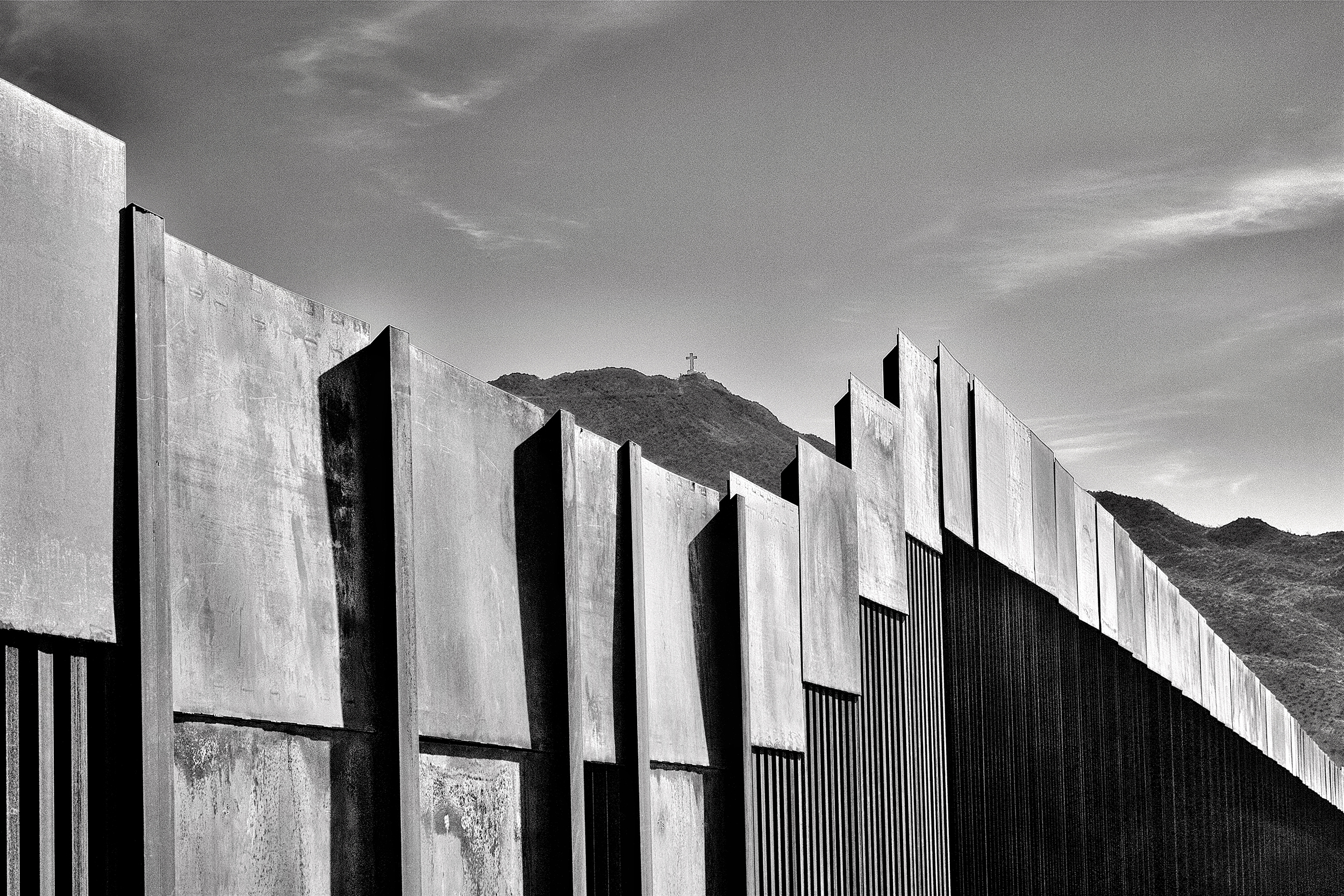
There is tension in everything I photograph at the border. The wall in the landscape can look like a Richard Serra sculpture stretching across the desert. At the same time, I’m aware it’s been painted black, at great expense, to burn the hands of those who climb it. Horror juxtaposed with beauty.
There is tension in when I photograph the human condition. There is also beauty in the pathos of the migrant mother’s eyes as she combs her daughter’s shiny black hair and adorns it with a red silk bow. Pride and dignity juxtaposed with desperation.
I don’t soften the beauty to make the suffering seem more serious, nor do I hide the suffering to make the image more beautiful. I capture both at once because that’s what is there. If a photograph is only horrifying, people look away. If it’s only beautiful, they stop looking deeply and just admire it. I want the beauty to be what makes someone stay long enough to see the suffering beneath it. That’s not a contradiction. That’s the whole point.
Your work is explicitly described as “art activism.” I know many artists, possibly some of our TPS members, would be uncomfortable engaging in politics for fear of alienating some of their audience, or they feel that art has no real impact… What would you say to an artist who feels that tension between wanting to speak through their work and being afraid of the consequences?
Each artist must decide for themselves what risk they are willing to take. The artist needs to know in their mind and heart what is important to express in their art. That is my definition of an artist. They also need to find what they are comfortable with. They cannot control how others look at or react to their art—everyone views art through their own particular lens—they can only control what they want to create.
When I show a photograph of the wall stretching across the desert, I know some people will see security, while others will see a terrible beauty and compare it to the Berlin Wall. Many will see a scar, a gash, a dividing line snaking across the land. A wall of inhumanity. Some will see only a structure, while others will see it as a symbol of other things that are happening. That range of reactions isn’t a failure of the work. It’s proof that the work is doing something.
I make art because deep in my soul, I’m driven to open eyes to what is unraveling at the border, and there is danger in looking away. I’m not afraid of making people uncomfortable because this moment is the moral fault line of our time. I must let go of any hesitations. Be fearless. Be bold.
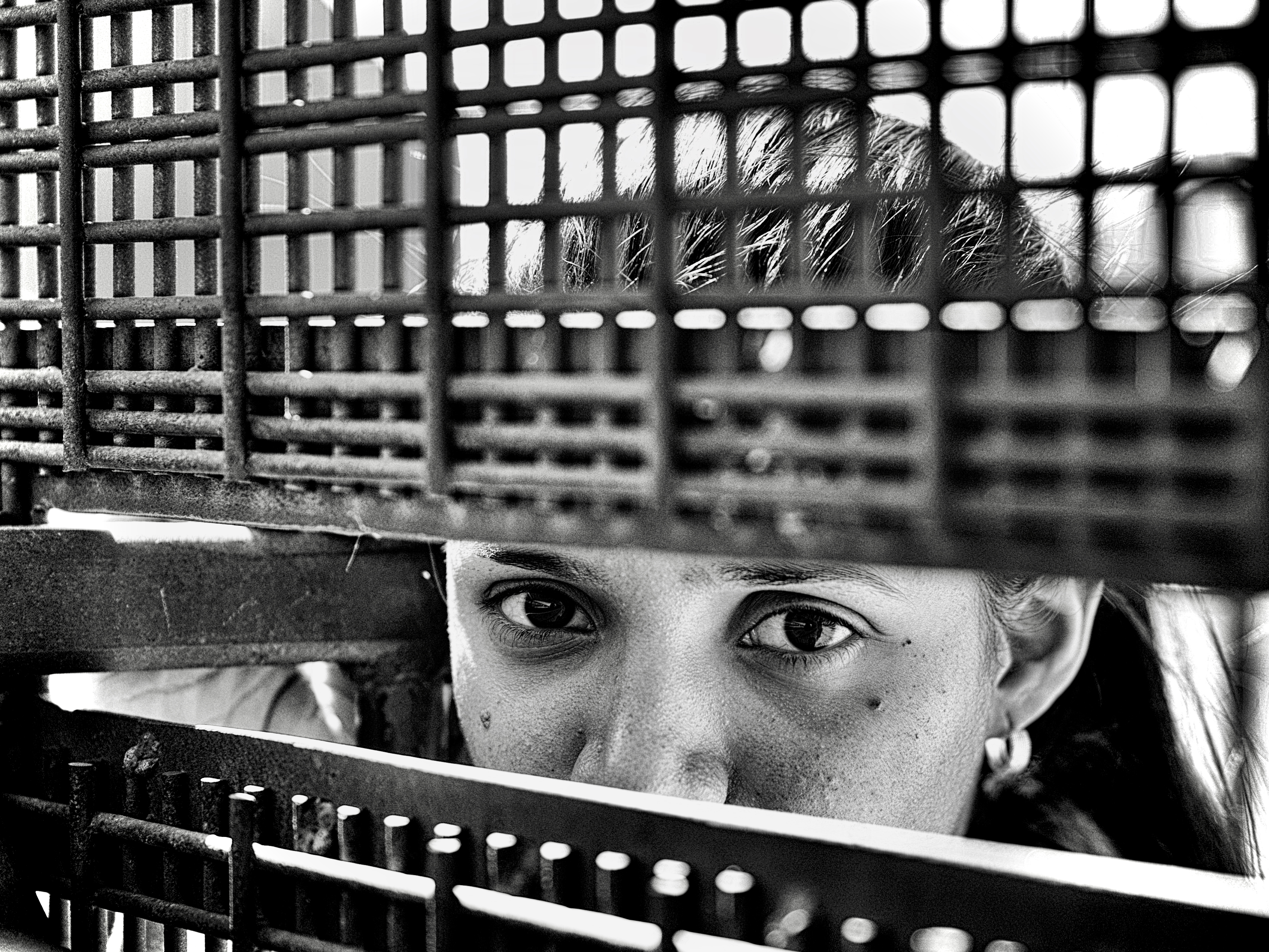
In your statement, you say you hope to ignite bipartisan discussions focused on fact-based solutions, which almost sounds radical in today’s angry and divided political climate. Can photography help bridge those divides and inspire practical, productive change? Have you had discussions and found common ground with people on all sides of the immigration issue?
Yes, I’ve seen it happen. In West Texas, a Department of Homeland Security plan to build a border wall through Big Bend National Park brought together coalitions that don’t usually agree on anything. Conservatives concerned about public and private land, environmentalists, dark-sky advocates, eco-tourism operators, and local business owners all ended up on the same side of this fight — not because of politics, but because of a shared self-interest in protecting something they all valued.
I contributed to that pushback with my own “NO WALL” photo posts on Instagram, but I was just one voice among many. Other photographers relentlessly shared images and video of land now at risk of irreparable damage. These posts helped turn it into a rallying cry across social and national media. That pressure moved the needle: construction on that section of the 30-foot steel bollard wall has paused, and DHS sent a senior official to Big Bend to hear from the people who live there.
That’s the case for me. Photography didn’t convince anyone to change their politics. It gave people who already cared about this land, for very different reasons, a shared, highly visible cause to rally around. That’s not nothing. Sometimes bridging a divide doesn’t mean changing anyone’s mind. It means finding the one thing you already agree on and making it impossible not to see it.
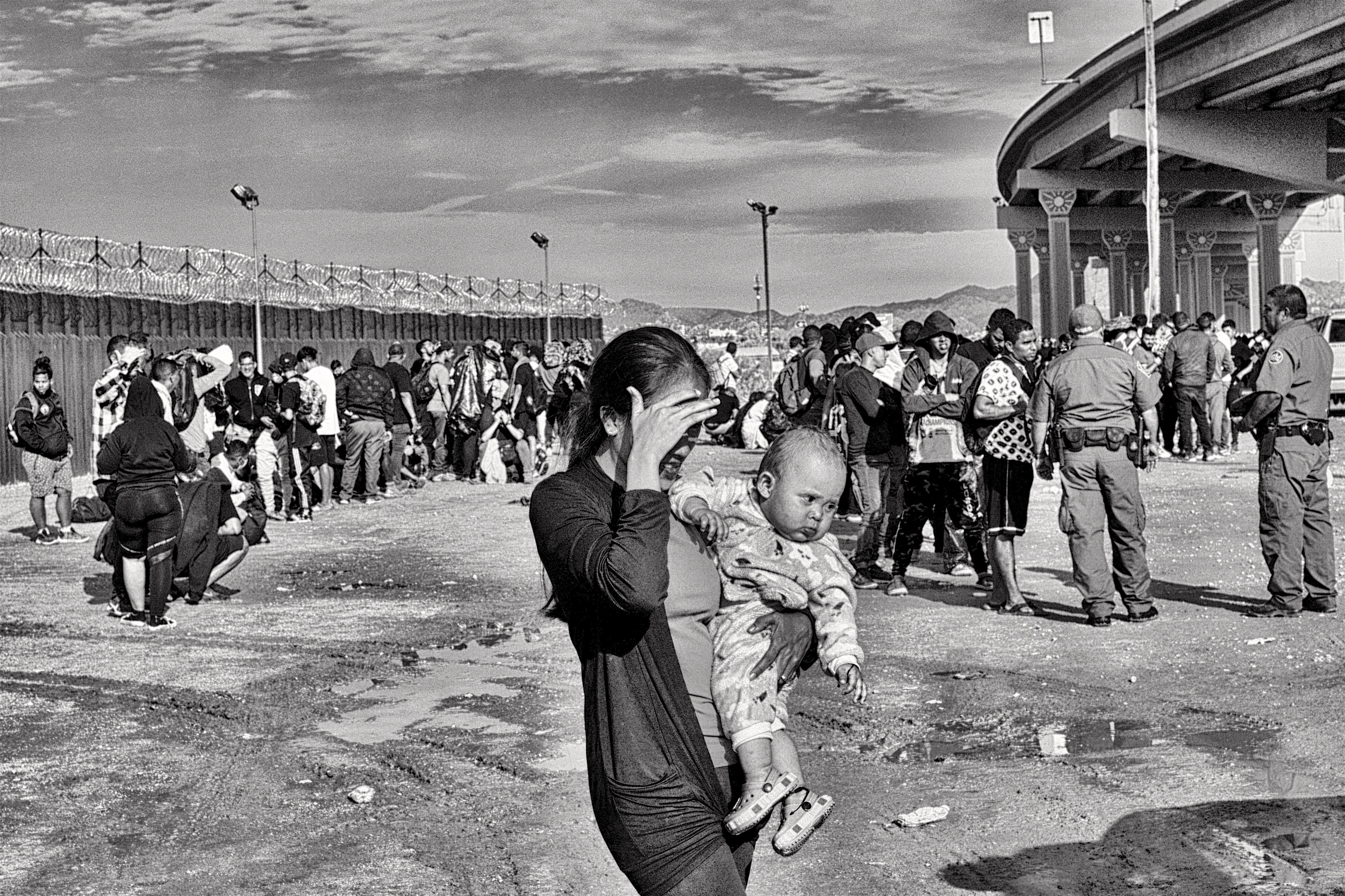
You’ve photographed migrants in incredibly vulnerable situations. What responsibilities do you feel as a photographer to ensure that their images being made public ultimately benefits them?
No one has ever objected to being photographed. I communicate with them as I am taking the photos. They seem to trust me and feel safe with me, with an unspoken understanding that I am on their side and there to help. I work toward the goal of helping humanity through my photos.
Documenting this microcosm of the immigration story in this place and at this point in time is important to me, and to the story.
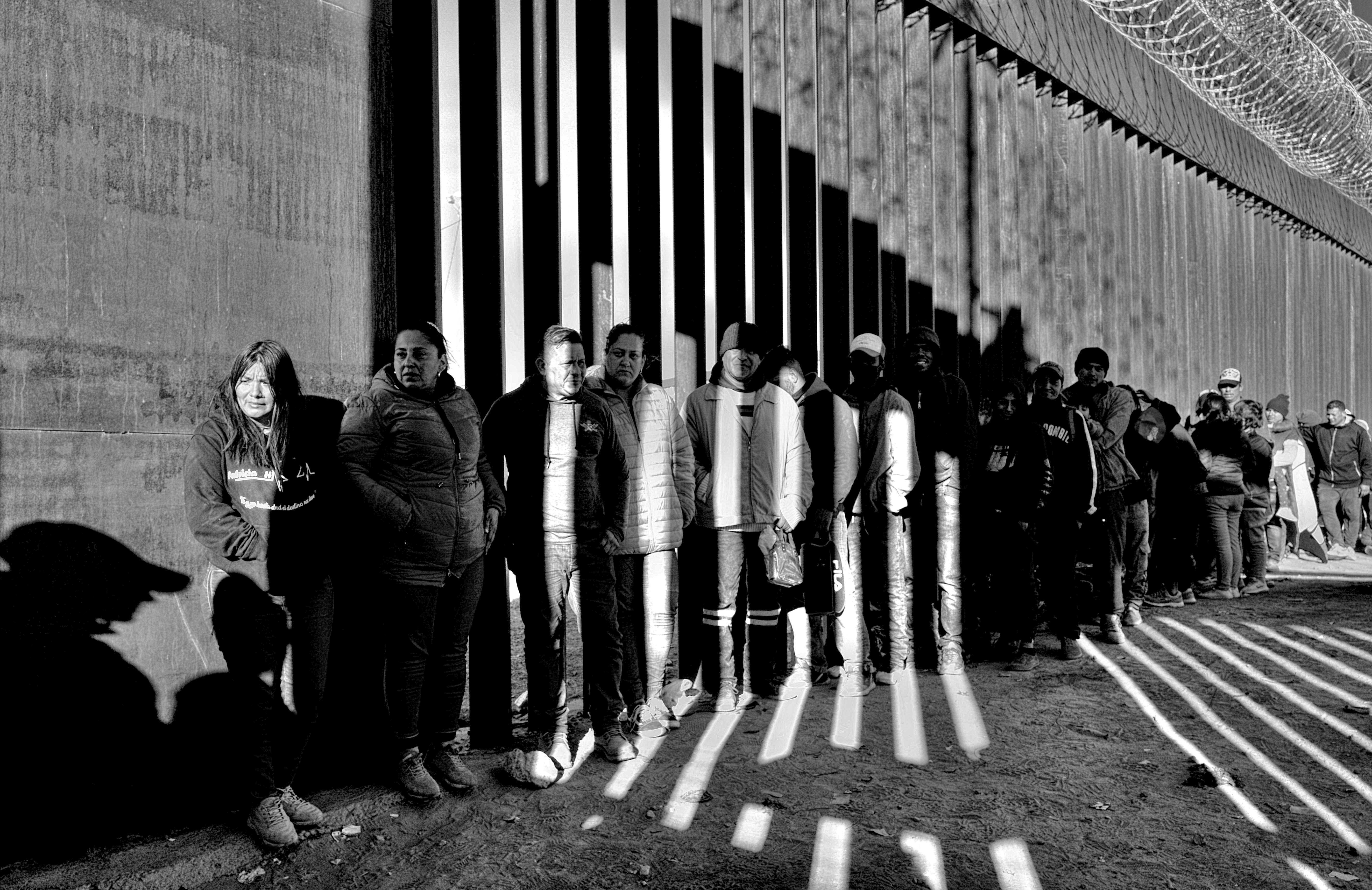
You’ve described your goal as challenging complacency and getting people to care. Have there been moments when a photograph, an exhibition, or an interaction with a viewer made you feel the work changed someone’s perspective?
It’s easy to share my work with people who already think the way I do. The real challenge is reaching people who see the border differently than I do. Galleries and studios come with a built-in exclusivity. You have to already know to look for the work or feel comfortable walking through that door. That leaves out the person who never sets foot in a gallery in the first place, often the person I most want to reach.
That’s why I wheat paste my photographs on exterior walls in public for everyone to see. I once brought my cousin to show him a photo I had wheat pasted in an alley, depicting Venezuelan men in line to request asylum. He was shocked to find someone had scrawled "WETBACKS RUN" across it. I told him that’s exactly the engagement I want, good or bad. Weeks later, I went back. Someone had scratched out “RUN” and written “WETBACKS ARE WELCOME” in its place.
The purpose of a photograph is to evoke a reaction, good or bad. The spark it ignites is where its power lives. That photograph, wheat pasted in an alley, became a place where two strangers argued in real time, in public, about who belongs here. I don’t know if I changed anyone’s mind or just gave them a place to put what they already believed, but for one moment, two strangers had a reckoning with each other. And I just gave it a place to happen.
I do know that a photograph can open a window into someone else’s humanity and change someone’s mind. When I photograph a mother making an impossible, dangerous journey to keep her children safe, I hope the person looking at it is also a parent or can relate. Not because they’ll suddenly agree with me on immigration policy, but because, for a second, they might recognize themselves in her. That recognition is something they didn’t expect to see. It is where I hope perspectives can actually start to shift.
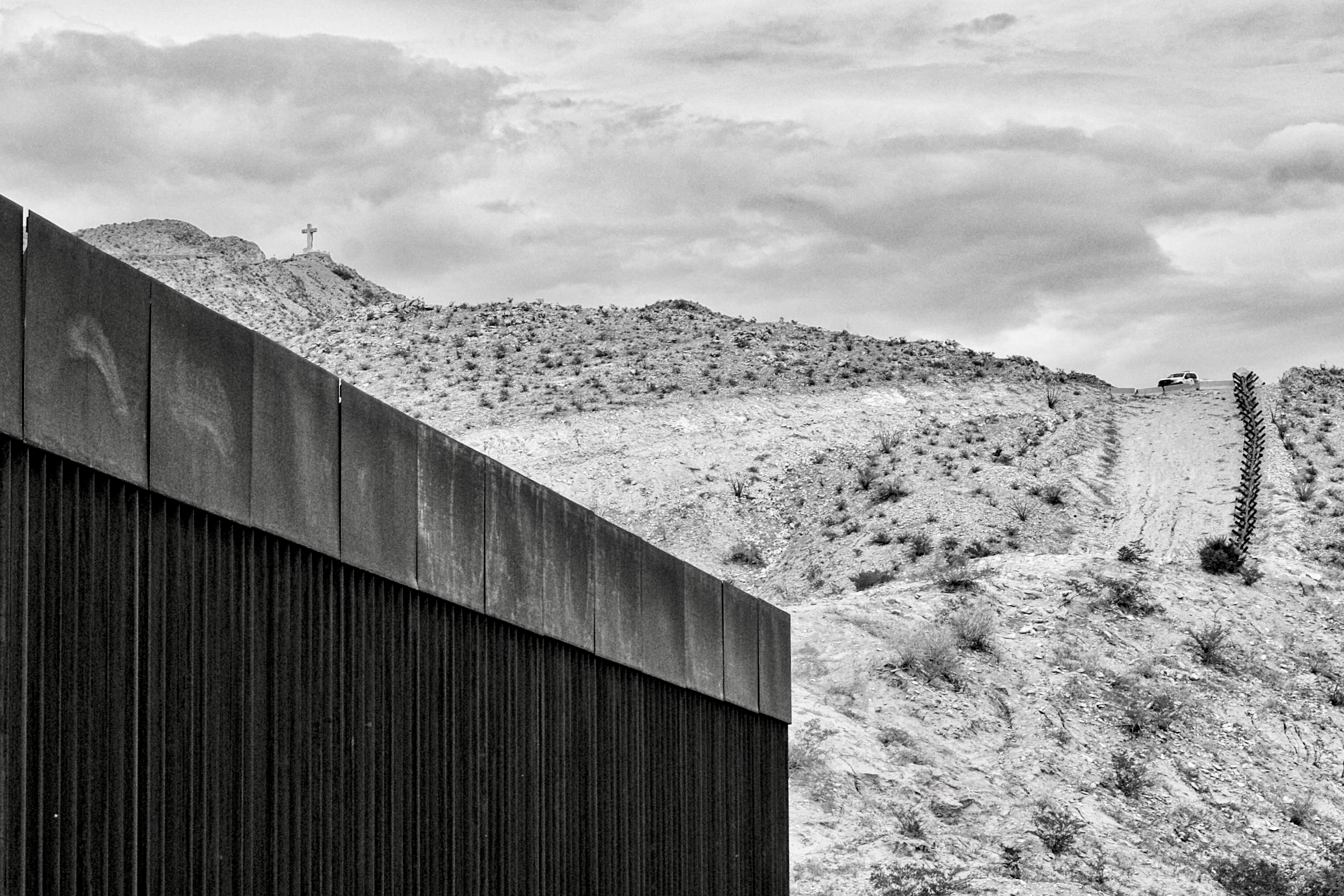
You’ve spent years returning to the same stretch of the border. What have you learned about the place that you couldn’t have learned from a single assignment or visit?
Returning to the border again and again has taught me that the landscape is ever-changing. With each reconnaissance trip, the visuals and dynamics shift — new construction, new patrol patterns, and signs of who has passed through and when. You cannot capture that in a single visit, only a few frames of one moment in time.
Repeat visits give me what a single assignment never can—the chance to slow down and explore the desert along the border, not just photograph around the edges. Over the years, I’ve started noticing what gets left behind—belongings and the bones of migrants in the sand at the end of their journey, now half-buried. It’s becoming an archaeological site, a graveyard of objects migrants carried and then abandoned, whose whereabouts are unknown. If I hadn’t kept going back, I wouldn’t have known any of it was there.
Every time I leave, I want more. There’s always another connection to follow and another story I haven’t heard. Giving myself this assignment means I’m the only one deciding when it's finished.
What still astounds me is that most El Pasoans have never experienced any of this — many have never even walked up to the wall to feel its true magnitude. All of this is hidden in plain sight, right in their own city. It just takes time and interest to see it. That’s what I provide. An opportunity to see.
About Laurie....
Pulled to the El Paso–Juárez borderlands by her West Texas roots, Laurie photographs the migration crisis on both sides of the Rio Grande and the environmental impact of the border wall cutting through the Chihuahuan Desert. As an art activist, Laurie aims to make people care—evoking compassion and challenging complacency. By highlighting the moral and social divisions of today, she encourages dialogue about legal, fact-based solutions. Laurie approaches her subjects honestly, with only her Leica over her shoulder as she documents the unfolding story.
Living in Colorado, Laurie is often on the road heading to the borderlands, specifically the El Paso Sector, to chronicle the expansion of the wall and the immigration story, while advocating for positive change. Since most people can’t visit the border in person, her photographs are critical for showing the realities on both sides. Her work has been exhibited in installations across the U.S. and featured in publications that address social issues.
For over 30 years, before starting this project, Laurie traveled the world photographing food and travel narratives for magazines and cookbooks.
See Laurie's website for more images...