Artists featured in the monthly Member Spotlight are selected from our online Members' Gallery. If you wish to be considered for the Spotlight in the future, send us a note!
Greg Davis - November 2025
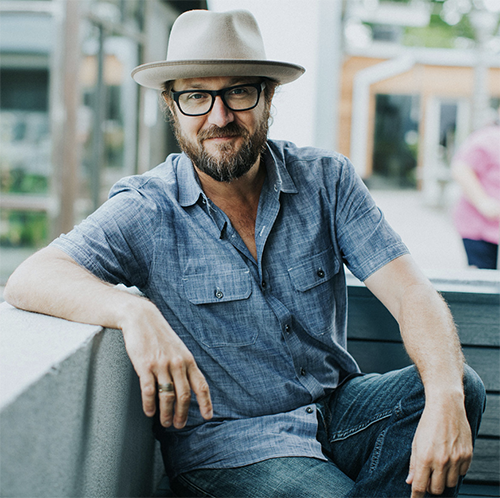
Greg Davis, a 6th Generation Texan, is a contributing photographer for National Geographic/Disney and was represented by the National Geographic Image Collection for over a decade. Over two hundred of his works can still be found in the archives at National Geographic. Davis’ work was recently published in National Geographic photo books, America the Beautiful, Destinations of a Lifetime, and Women: The National Geographic Image Collection, which also has a worldwide traveling exhibition, Women: A Century of Change, that features some of Davis’ work. In 2017 he was honored as the Ambassador of the Year for Austin based non-profit, Well Aware, the first time they had ever awarded this recognition. Well Aware funds and implements sustainable clean water systems that drive development and empower communities in East Africa. Davis worked his way from local festivals to international exhibitions and his works now hangs in private and institutional collections worldwide. The Wittliff Collection, The Raymond James Collection and The Grace Museum are just a few of the spaces that house Davis’ collectible works.
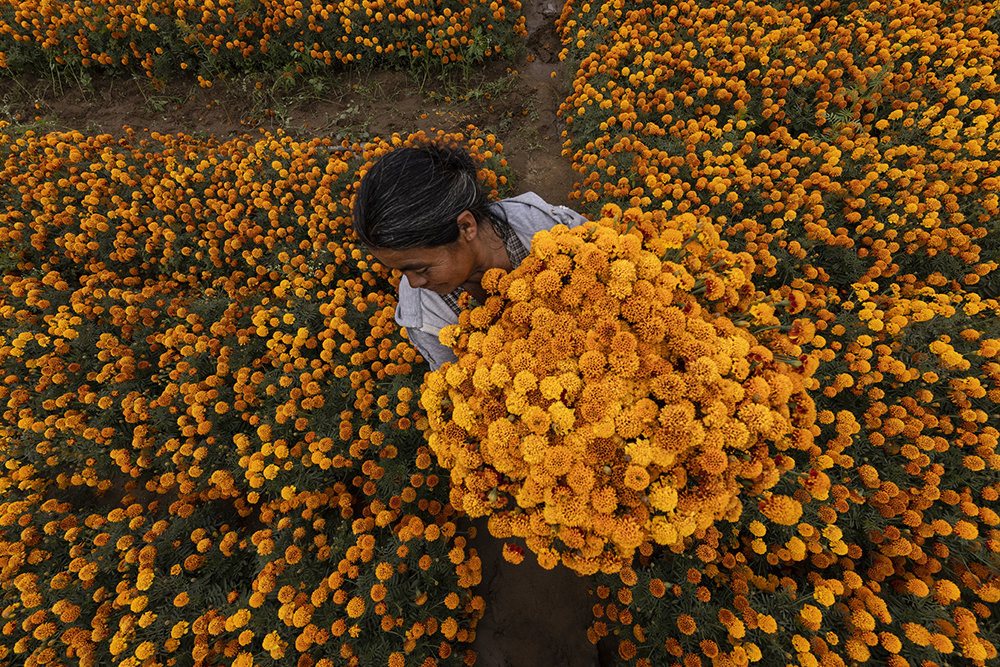
Davis is currently offering his latest traveling exhibit, Oaxacan Gold, to art centers and museums around the nation. The purpose of this exhibition is to bring awareness to the stunning beauty, cultural depth and mystical nature of the great Mexican State of Oaxaca through an educational multi-media cultural experience of photography, folk art, textiles, dance and music. In November 2025, Greg spoke to Chris Ireland, Executive Director of Texas Photographic Society, about this project:
The title “Oaxacan Gold” evokes richness—culturally, visually, and perhaps metaphorically. How did you arrive at that phrase, and what does “gold” represent for you in this context?
The title Oaxacan Gold came from the idea that, throughout history, many people have come to Oaxaca in search of gold. But for me, the true “gold” of the place lies in its people, its customs, and its traditions. Oaxaca is a place you could spend a lifetime documenting and still only begin to scratch the surface. In this exhibition, I tried my best to honor that richness. One day I sat down with a pen to write the introduction wall text, and it just flowed out of me—only a few words needed changing in the end.
Introduction Wall Text:
There is a spirit in everything, even in the silent spaces between. A timeless wisdom, well beyond knowing, that walks beside us and within us. It has no bounds and seeks no bounty.
The human experience is a mystery, a communion with nature in its many forms. The divine manifests itself through nature. From the plants and animals that we rely on to nurture and express ourselves, to the passage of time as we each expand both internally and universally.
Many throughout history have come to Oaxaca seeking the promise of gold, but what they all discovered here was much more valuable – its people, its traditions and its culture.
Your photographs are exhibited alongside traditional Oaxacan art forms—alebrijes, black clay, textiles. How do you see your photography acting in conversation with these craft forms?
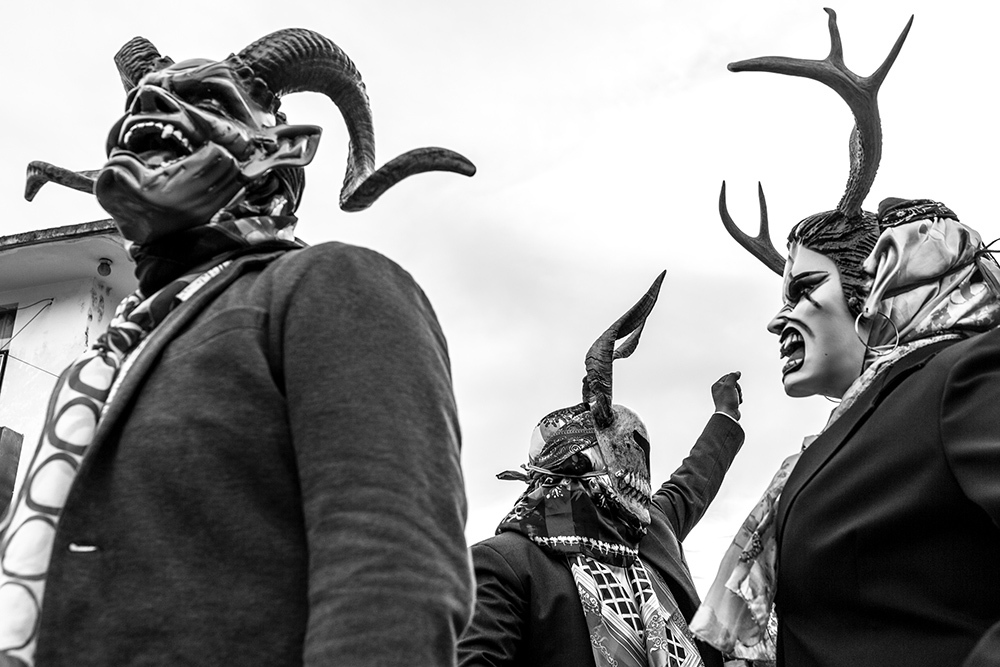
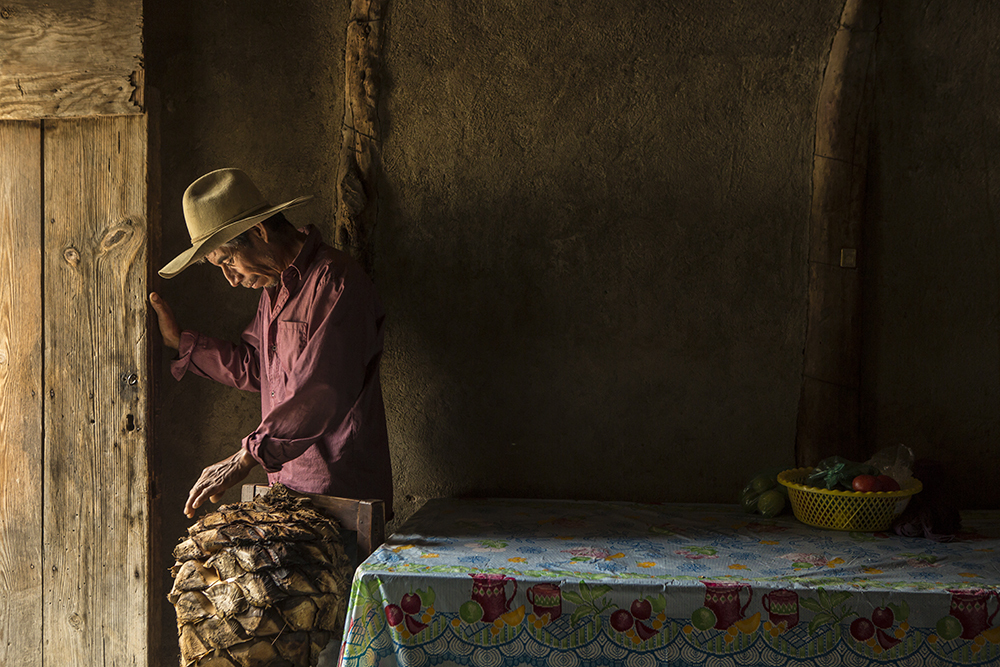
Absolutely. Many of the photographs in the exhibition were chosen because of their direct relationship to the artists and the traditions they’re part of. Some of the images are portraits of the artists themselves—environmental portraits, more suggestive portraits, and even moments of them actively creating their work. I feel like that the subjects have agency in their own representation by having works of their own in the exhibit.
For me, photography becomes a way of honoring those artisan traditions by placing some of the makers at the center. Just as alebrijes, black clay, and textiles speak to the identity of Oaxaca through material and technique, I try to let my images speak through people—their hands, their spaces, their expressions. Art is one of the most powerful ways a culture defines itself, and in Oaxaca it lives on the surface of everyday life. My photography is simply another voice in that conversation.
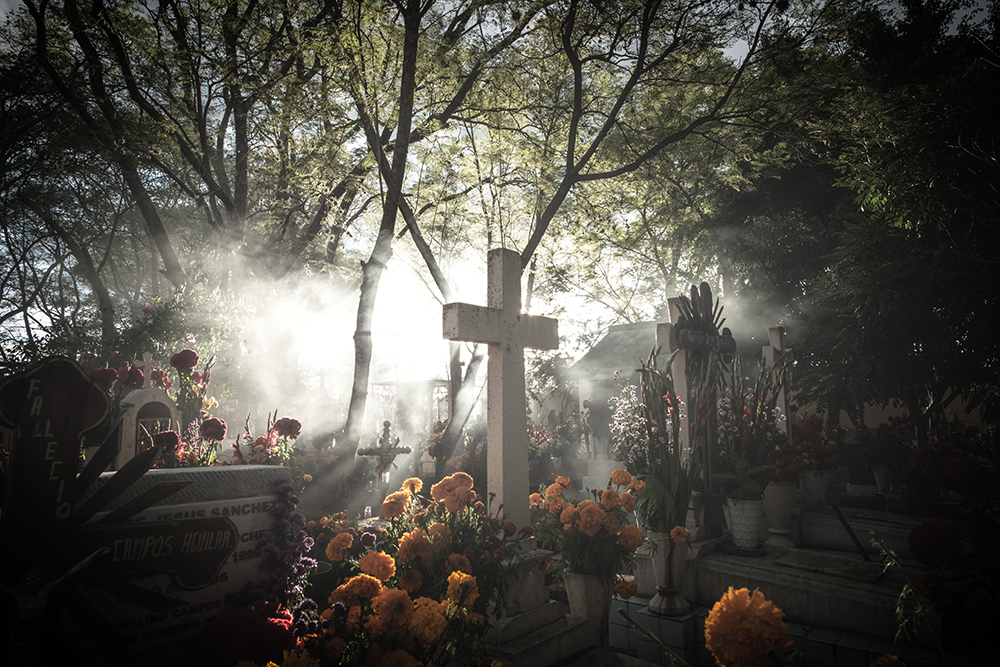
You mention awareness of Oaxaca’s “mystical nature.” Can you describe how you captured that mysticism through your lens? Were there specific moments or challenges in doing so?
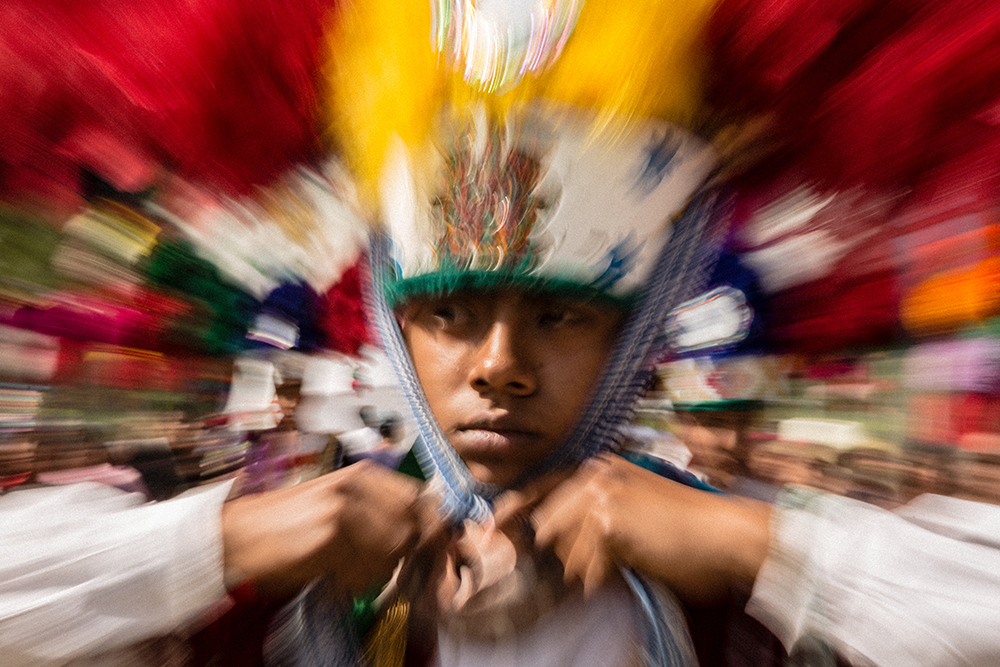
For me, the “mystical nature” of Oaxaca isn’t something that could be directed photographically—it’s something I had to be quiet enough to notice. It lives in very intimate moments: the smoke from copal drifting across a cemetery at sunset, the movement of a procession at dusk, a single beam of light illuminating the magic of a "niño santo” mushroom and the way that masks serve as bridges between the physical and the spiritual—vessels through which the mystical reveals itself.
Photographing this mysticism came with challenges. It’s intangible—you can’t point a camera directly at it. It’s in the atmosphere, the light, the rituals, and the way people move through their faith and daily life. Sometimes it meant waiting in one place for hours, six to be exact in the case of El Espiritu del Panteon, or stepping back so I didn’t intrude on a sacred moment. Other times, it was about recognizing when the moment was too personal to photograph and then choosing to not make the photograph.
In the end, I wasn’t trying to explain the mysticism—just to let it be and to be felt.
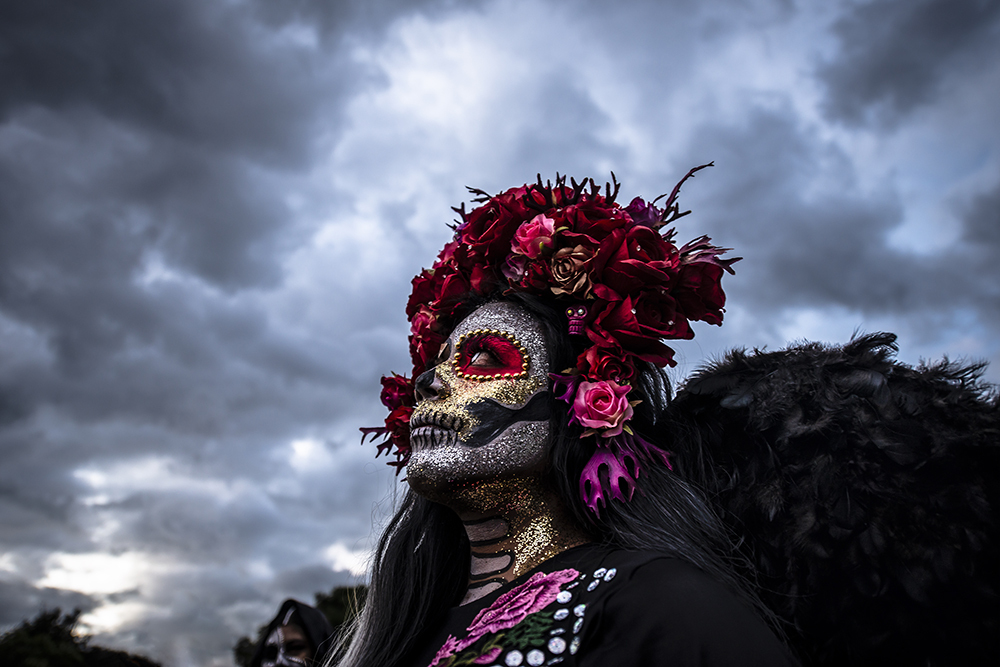
When we spoke about Mexico the other day, you spoke about the distinct identity of the Oaxacan people. What drew you specifically to Oaxaca for this project, and how did you approach representing it authentically?
What drew me to Oaxaca is its sense of continuity—its Indigenous people still live on the land of their ancestors, in close communion with nature, the plants, and the animals, just as they have for millennia. That relationship with the natural world has shaped traditions that are deeply rooted and still present in daily life. It’s a living culture, not a memory.
The purpose of my work has always been to serve as a reminder to us that we are all part of something greater than ourselves. At a faster rate than ever before, our world is shrinking and traditional cultures are at risk. It is imperative that we be aware of and respect the diversity of our planet as well as our unprecedented need to preserve it. That passion and purpose are what guided me to Oaxaca—to help illuminate this mission.
I’ve long had a deep love for the Mexican people, and with Oaxaca, that love is grounded in respect. When the Art Center Waco invited me to create one of the first exhibitions for their new space, I began this project in 2018. Over the next five years, I traveled back and forth, building relationships and gathering images and stories, culminating in the exhibition’s premiere in the summer of 2022.
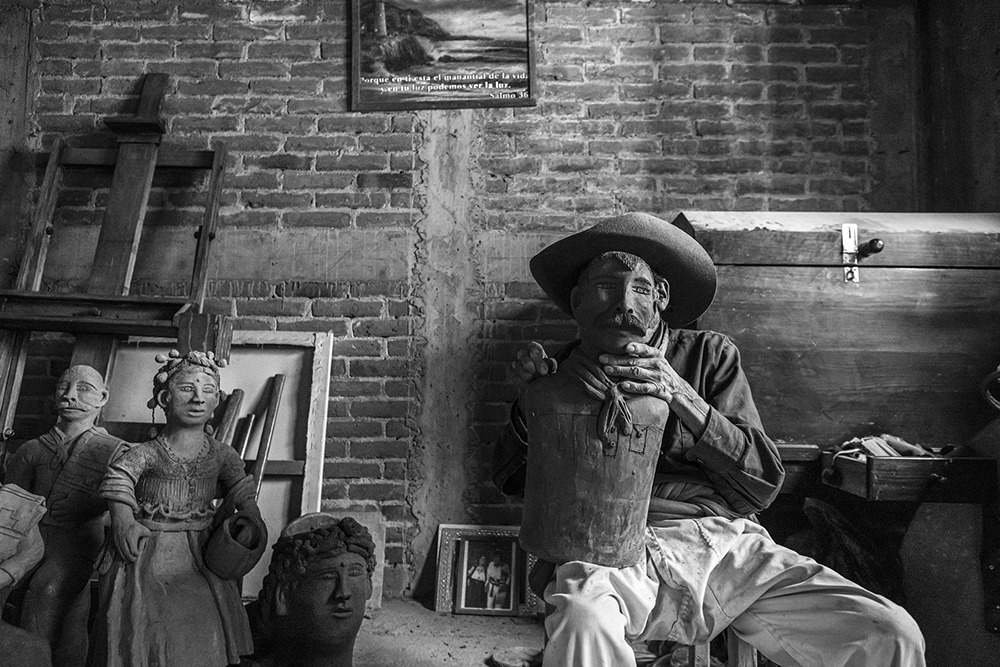
How did your process — from conception through shooting through editing — differ for Oaxacan Gold versus your previous projects that you have done in the past. What did this series teach you?
Well, my previous major project, India’s Kumbh Mela, involved motion, which is a whole different animal. We produced an 11-minute short film, Cloth Paper Dreams, which made its way around the film festival circuit and was ultimately acquired by Gaia.com. Although it was exciting to attend the film festivals as the Director, I realized that I really prefer working with stills. Oaxacan Gold shared some similarities with that first project’s premiere—dance, music, food were part of both—but it differed in a key way: I focused on building relationships with artisans in Oaxaca and exhibited the works of six Masters in the exhibit alongside my photography, works including alebrijes, black clay sculpture, ceramic sculpture, natural-dye textiles, and wood-carved masks. What this project taught me is that people want to help you achieve your mission if you’ll just communicate it clearly to them. Generosity and collaboration are part of our shared human DNA. I truly owe a special thank you to all of my subjects, as well as my guides and fixers, Sharon, Timiteo, Blanca and Fernando, who accompanied me in helping make the vision a reality.
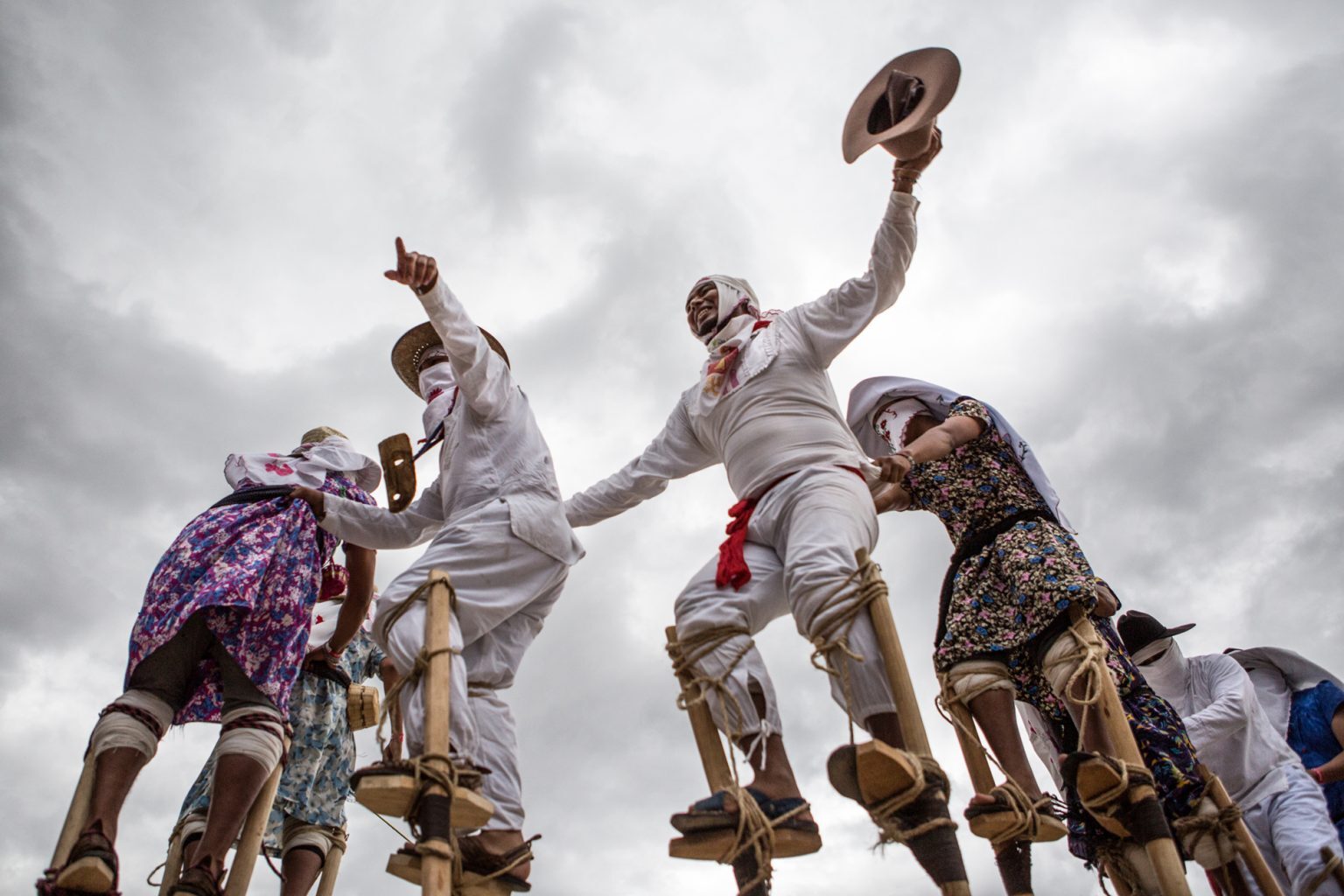
What do you hope viewers will take away from this series? Is there a feeling, a question, or a moment of discovery you aim to provoke?
Because of the educational nature of the exhibit, it was partially funded by the Texas Commission on the Arts and the National Endowment for the Arts. Most of the pieces are accompanied by a story, translated into both Spanish and English, and out of respect for where the images were made, most of the works are titled in Spanish. My hope is that this exhibit gives viewers a sense of the pride and rich cultural heritage in Oaxaca, while offering those of us across the border a deeper appreciation for how remarkable our neighbors are. More broadly, I hope it encourages viewers to recognize the importance of respecting the diversity of our world and to honor it by supporting and helping preserve these traditions.
Finally — any surprising revelations, insights, or personal transformations you encountered while creating Oaxacan Gold?
The most meaningful parts of this journey were the friendships that I formed—not only with the Oaxacan families I met but also with my guides, Fernando, Timiteo, Sharon and Blanca, and my Collectors who now have pieces of Oaxacan Gold in their homes and offices. I truly appreciate that the Texas Commision on the Arts and the National Arts Endowment, among many other, have shown their financial support of the exhibit. In addition, I'm humbled and honored that three of the pieces from this project were acquired by the world-renowned Wittliff Collection. And I’m currently in talks with the Museum of Southeast Texas about them adding a piece from Oaxacan Gold into their permeant collection.
You can see more of Oaxacan Gold on Greg's website, also follow Greg on Instagram @gregdavisphotography