Artists featured in the monthly Member Spotlight are selected from our online Members' Gallery. If you wish to be considered for the Spotlight in the future, send us a note!
Kari Bishop - August 2025
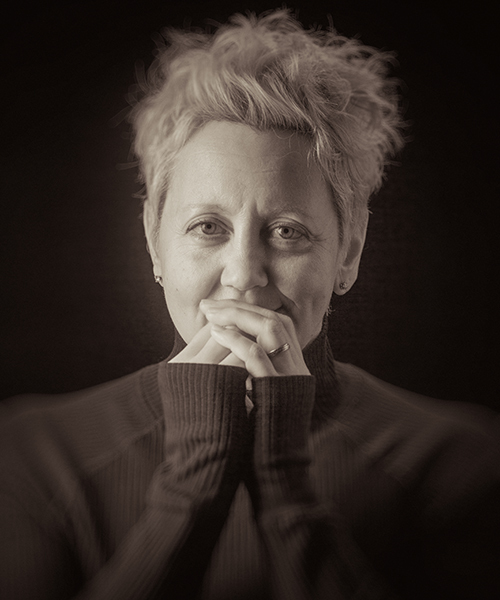
Where did you grow up and where do you live now?
I grew up in Texas, where the horizon never seemed to end and the seasons revealed themselves in subtle shifts of light and shadow. My childhood was stitched together with long walks through pastures, the weathered lines of fences, and the quiet company of animals. That sense of spaciousness and solitude shaped how I see the world.
I left for California, where my art career began, and stayed for nearly two decades. Returning to Texas was never part of the plan, but when my father was diagnosed with Alzheimer’s, my husband and I came back to the land that held my earliest memories. I stepped away from the public art world for more than fifteen years, caring for my father and navigating deeply personal seasons of infertility, caregiving, and questions of motherhood. Though no longer exhibiting publicly, I continued creating privately — turning to photography, writing, and quiet ritual to stay connected to the creative thread.
Now, with renewed clarity and vision, I live and create on a family ranch in North Texas, sharing my days with a herd of sanctuary alpacas and a shifting menagerie of animals. My studio sits just steps from the pasture, and the rhythms of caring for the land and its creatures are inseparable from my practice. Whether I’m submerged in the pool with a camera in summer or layering beeswax and gold leaf in winter, this place — its stillness, its wildness, its constant reminder of impermanence — is always where my work begins.
Why did you join TPS?
A few months ago, a friend encouraged me to put myself out there more, so I joined TPS. It’s been a welcoming surprise — in that short time, I’ve been accepted into a show, invited as a spotlight artist, and reminded how inspiring it is to be part of a community that celebrates photography.
Why did you become a photographer?
I was gifted a camera in high school, and it simply fit — like it had been waiting for me. At the time, I wasn’t sure which direction I wanted to go. I earned degrees in both Psychology and Fine Art, thinking I might move into art therapy. I’ve always been deeply moved by the inner landscapes of the mind, but somewhere along the way I realized it was me who needed to process and share the world — and the camera became that language.
Over the years, I’ve come to see the camera as just one tool in a much larger creative life. My images rarely feel complete when they leave the lens; they’re more like foundations. In recent years, I’ve pushed into mixed media and historic processes — layering beeswax, gold leaf, and vintage paper — finding they extend my voice in the same way that first camera did. It feels like the next natural step in expressing the art I’m meant to create.
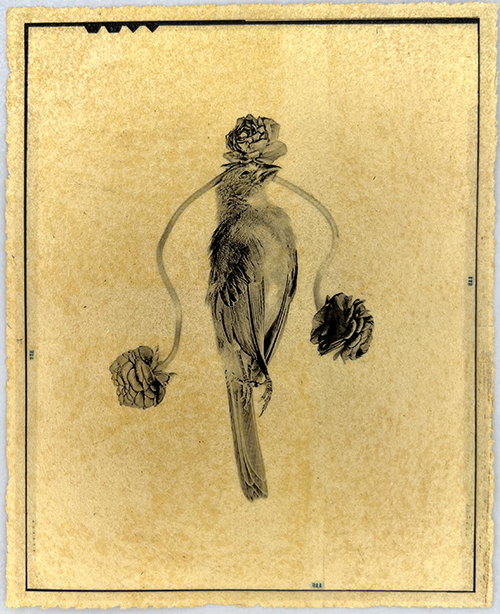
Your work is very evocative and hints at grander narratives, where do you get your inspirations for your themes?
The desire to work through my experiences and questions about life is what drives my art. I can’t not create — it’s as natural as breathing. Each piece is an answer to a question — about grief and loss, the long reach of Alzheimer’s, the weight of caregiving, the pull of spirituality, the tensions of politics, the complexities of infertility and motherhood, and the inevitability of impermanence and death. I think of myself as a purveyor of sublime and sensual truths. The projects I’m most devoted to can be narrowed down into six ongoing themes.
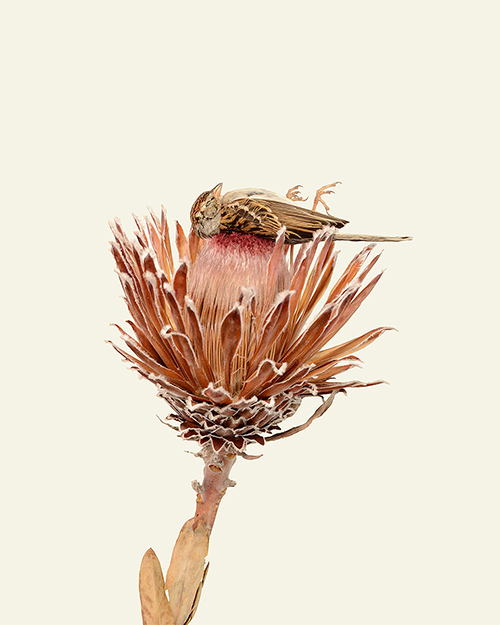
Beauty in Decay
I create each piece in the studio as an act of reverence for the feelings stirred by the remains I find — birds, bones, withered blooms. Composed and lit to reveal time’s imprint, the work honors texture, form, and quiet transformation. It feels like a slow, tender acknowledgment of what once was and what still remains.
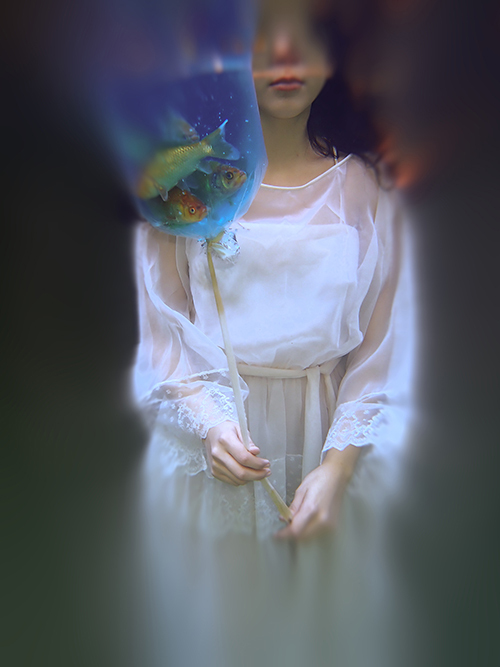
In Between Waking
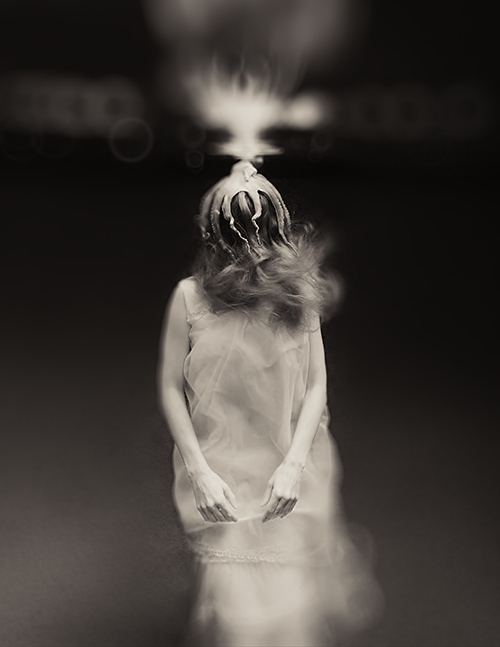
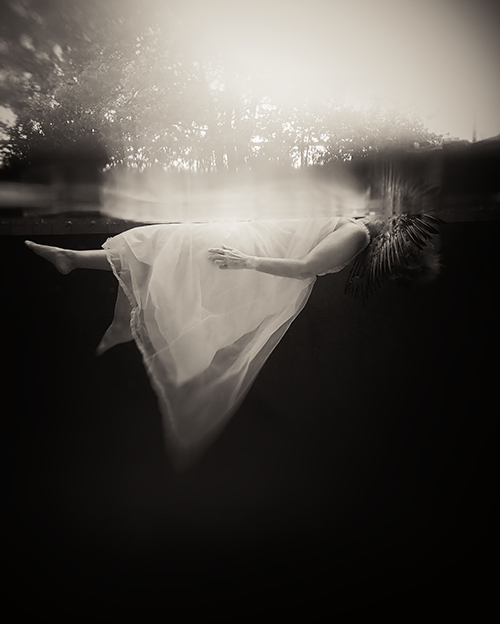
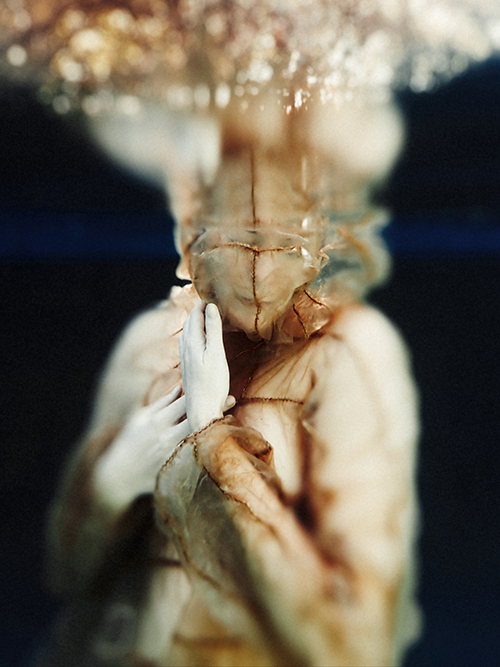
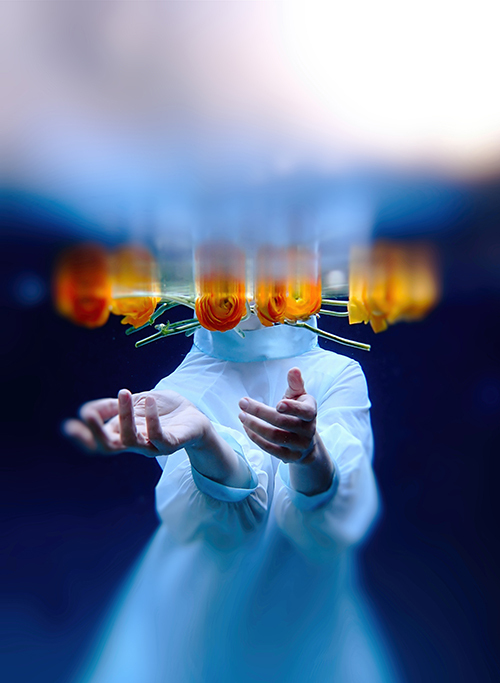
This series lives in the hypnopompic space — the threshold where sleep loosens its grip but waking has not yet taken hold. Created underwater in my backyard pool, the images gather that in-between stillness, shaped by shifting light, drifting fabric, and the quiet unpredictability of water. The work feels like drifting through two worlds at once, suspended in the breath between them.
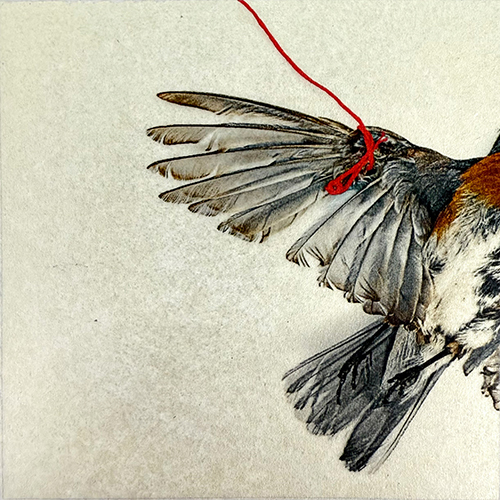
A Thread of Red
A single red thread runs through each image, symbolizing the pulse of life — a lifeline that both connects and contrasts the fragility of existence. Made from gathered leaves, branches, or petals, each piece is printed on acid-free vellum and touched with 12k gold leaf, transforming humble fragments into sacred artifacts. The work feels like a quiet pause in time, where fragility and resilience are held together in the same breath.
In Plain Sight
This series turns attention to what hides in the open — details so ordinary they slip past notice. By isolating and reframing them, I invite the viewer to slow down and see the beauty, texture, and quiet narratives woven into everyday spaces. The work feels like discovering something extraordinary in a place you’ve passed a hundred times before.
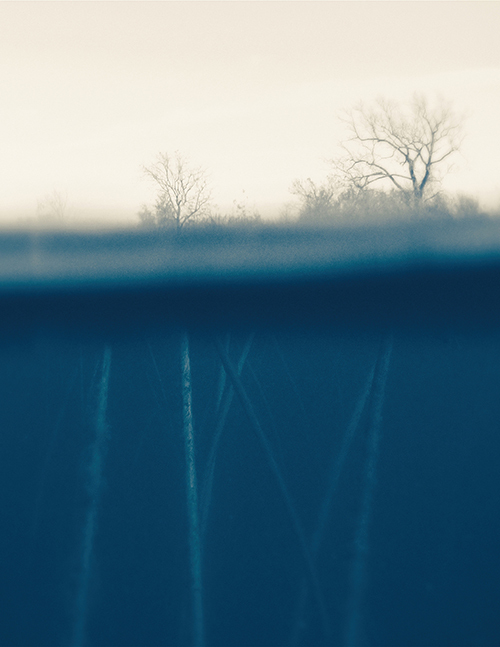
Unspoken Dialogues
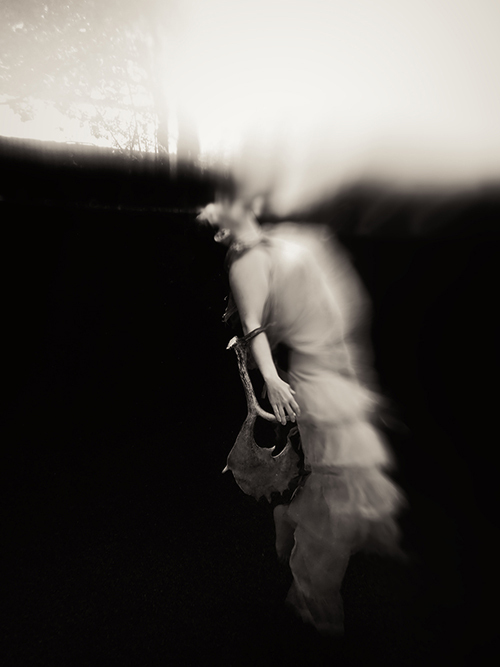
A visual conversation with what cannot be said aloud. Through gesture, shadow, and stillness, these images give form to the intangible — the sensations, tensions, and truths that live between words. The work feels like listening to a language you almost understand.
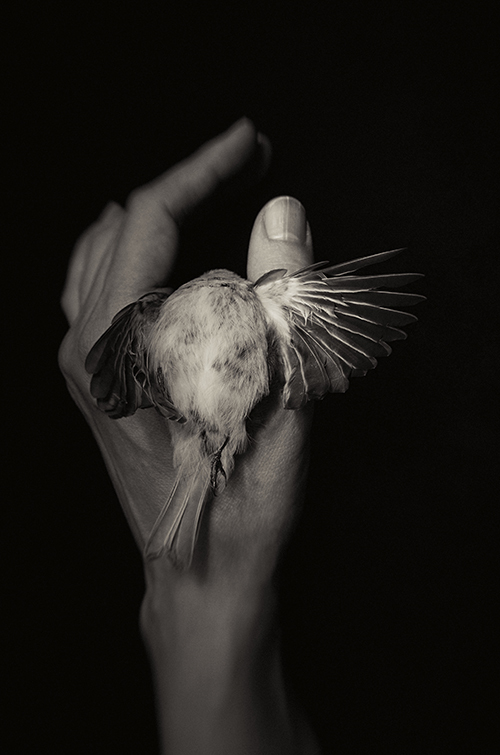
Notes to Self
An ongoing series of self-portraits created without performance or certainty. Made in quiet, instinctive moments, these works are gestures of vulnerability and recognition, fragments that chart the process of becoming. The work feels like catching an unguarded glimpse of yourself in a passing reflection.
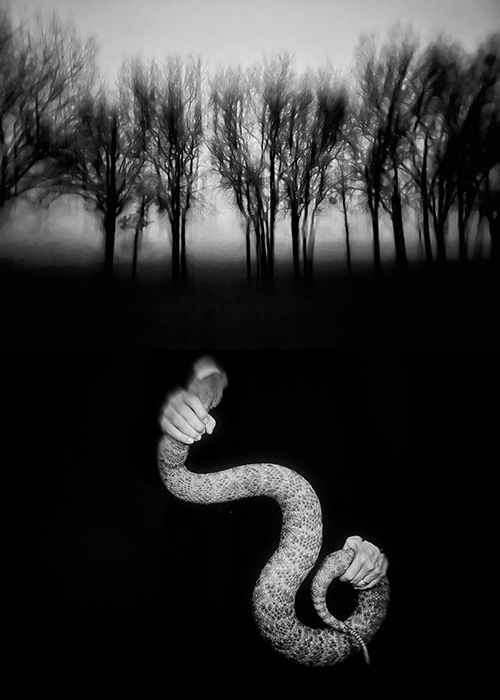
Do you have a mentor?
I’m less inspired by a single person and more by the conversations I have with others — the moments when someone says something that opens a door I didn’t know was there. Over the years, I’ve been fortunate to have mentors and workshop teachers who pushed me, challenged me, and encouraged me to keep going, but it’s often the “what” — the experiences, the connections, the questions — that keep driving my calling and pushing my boundaries to dive even deeper into my pieces.
Talk a little about your studio process, and the importance of the landscape and place around you? You seem like the type who collects things, and has an amazing work space.
My process often begins long before I’m in the studio. I move through the land, the antique stores, the vintage shops — wherever my curiosity leads me. I’ve been known to pull over on the highway to collect something that catches my eye, like the tumbleweed I used in Tumbleweed Tutu, currently on view in The Shape of Light through August 17th. Once, it was the octopus at the seafood counter in the grocery store — I couldn’t explain why, only that it spoke to me. Over time, friends and family have joined in, offering feathers, fragments, and curious objects they’ve come across — small gifts that feel like extensions of my own wanderings. Collecting is a meditative ritual, and what I bring back is never a trophy; it becomes part of the unfolding.
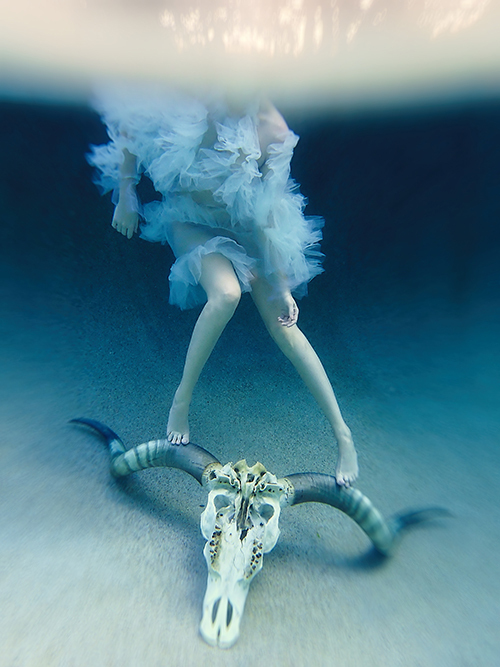
The studio itself is part cabinet of curiosities, part workshop — but mostly it’s a nest of treasures. Every corner holds something unexpected, gathered the way a crow collects glimmers or a fox tucks away its finds. Skulls and horns from animals we cared for in life, now kept close after they’ve passed, rest alongside snakeskins coiled in jars, insects pinned in quiet rows, and drawers of vintage paper and gold leaf. There are oddities with stories — pieces of my father’s taxidermy collection that I now treasure — not for their rarity, but for the connection they keep alive. I feel it every time I work with them. Most recently, I used his gut skin parka, made by an Indigenous maker in Alaska, in an underwater shoot — the material moving with a dreamlike fluidity, carrying both history and breath into the image.
There’s a kind of alchemy in following curiosity — trusting that what I’m drawn to will find its place, often in ways I could never have planned.
What work are you most proud of?
The work I’m most proud of is In Between Waking, my largest and most evolving body of work. Photographed entirely in my backyard pool with a simple underwater point-and-shoot, it’s a collaboration with shifting light, moving water, and the patience to wait for the frame to reveal itself. Over time, the work formed itself into four chapters that trace an emotional arc: unraveling softness, gathering strength, crossing thresholds, and becoming through release.
The pool is a true collaborator — its color shifts with the sky, its mood with the weather. Afternoons can be fast and unforgiving; evenings slower, but shared with cicadas, junebugs, frogs, and falling leaves. I work with people I trust — friends and family — a few willing to brave the night chaos. My files aren’t large or crystal clear, so paper choice is key. I love Pura Cotton Smooth 300gsm for its ability to soften edges; it finishes the image the way a soft breath finishes a dream — exactly how I see them in the book I hope to publish alongside the project’s first solo exhibition.
Best photo advice you ever received?
The best photo advice I ever received came during my year at Brooks Institute of Photography. One of my teachers called it the Big Mac Theory: every successful photograph needs three things — mystery, ambiguity, and contradiction. I didn’t know it then, but those three qualities would become the backbone of my practice. They are what keep an image alive, giving it layers to return to — the quiet tension that invites you to look longer, and the unanswered questions that make you come back again.
Your own words of wisdom for aspiring photographers.
Let your curiosity lead you, even into unexpected corners, and trust that what you find has a place in your art. Hold on to the Big Mac Theory — mystery, ambiguity, and contradiction — but remember the process should shape you as much as the image. And never be afraid to share your darkest work; it’s part of processing your own truths, and somewhere, there’s someone who needs to see it as much as you needed to make it. Some of my best work has come from letting myself be friends with the dark.
To see more of Kari's work, see the images below, and check out her webpage and follow her on Instagram.